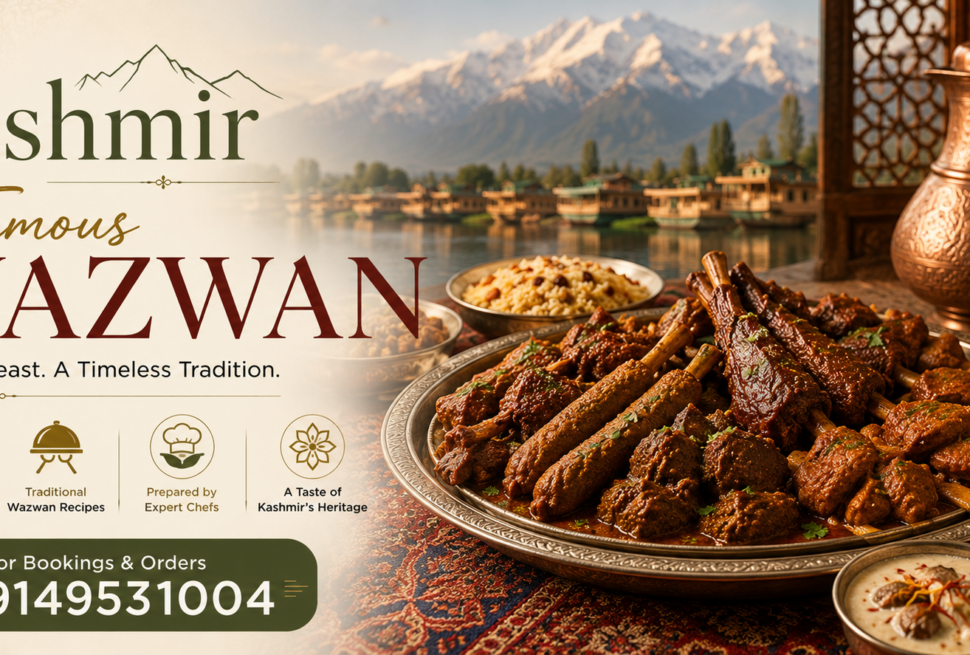
On my first visit to Kashmir, the vibrant culture and stunning landscapes were like a feast for the senses. But it was the Kashmiri Wazwan, a 36-dish culinary tradition, that truly captured my imagination. Kashmiri Wazwan is a traditional feast made for celebrating life’s big moments—and believe me, it’s an experience you shouldn’t miss.
Quick Facts
- Best Time to Visit: March to May
- Location: Kashmir Valley, India
- Distance from Srinagar: Wazwan restaurants can be found throughout Srinagar
- Ideal For: Food enthusiasts, culture lovers
The Essence of Kashmiri Wazwan
Kashmiri Wazwan is much more than just a meal; it’s a social gathering steeped in tradition. Picture yourself sitting cross-legged on a finely woven carpet, surrounded by friends and family, as a large copper platter brimming with exquisite dishes is placed before you. The comforting aroma of saffron and cardamom fills the air, hinting at the flavors to come.
What many visitors don’t realize is that the Wazwan is not just about eating—it’s a celebration of craftsmanship. Skilled chefs, known as Wazas, carefully prepare each dish using time-honored techniques passed down through generations. The pride they take in their craft is palpable in every bite, from the richly spiced Rogan Josh to the delicate Yakhni simmering in its own fragrant broth.
A Glimpse Into the Wazwan Dishes List
One of the most intriguing aspects of a Kashmiri Wazwan is the diversity of the dishes. From the famous Seekh Kebabs that melt in your mouth to the fiery Tabak Maaz lamb ribs, the flavors are as varied as the people who created them. For those with a sweeter palate, the indulgent Shufta—nuts and fruit stewed in sugar and spice—is sure to delight.
The key to enjoying Wazwan is to pace yourself. Each dish brings something new to the table, both literally and figuratively. It’s almost like uncovering a delicious mystery, layer by layer. Often, as I savored dishes like the spicy Rista or the buttery Gushtaba, I found myself reflecting on the sheer artistry involved in balancing such complex flavors.
Experiencing Wazwan in a Traditional Wazwan Restaurant in Srinagar
For a truly authentic experience, I recommend dining at a traditional Wazwan restaurant in Srinagar. The city is home to some of the finest establishments that specialize in this elaborate feast. As you make your way through the bustling streets, you’ll notice how the Wazwan restaurants preserve not just the food but also the cultural identity of Kashmir.
When I first walked into such a restaurant, the warm glow of overhead lanterns welcomed me. But here’s what surprised me most: the serenity amidst the clatter of plates and lively conversations. This was a place where tradition and camaraderie met in perfect harmony.
What struck me was the sense of community. Sharing a Wazwan isn’t just about the food; it’s like becoming part of an extended family, even if only for a meal. The flavors of Kahwa—a saffron-infused green tea—served at the end, left a warm, soothing imprint on my taste buds as if sealing a culinary pact.
Spring: The Perfect Season for Wazwan
Spring in Kashmir is nothing short of magical, making it an ideal time to partake in a Wazwan feast. With the valley awakening from winter’s slumber, the environment lends an added freshness to the experience. The blossoms of almond and cherry trees break into vibrant colors, echoing the diverse hues and flavors of the food itself.
On a crisp spring evening, I found the air buzzing with a chorus of bird calls, the distant gurgling of the Jhelum River harmonizing perfectly. The Wazwan, enjoyed amidst nature’s rebirth, felt like participating in the world’s own celebration. Does any season compliment a meal more than spring does to Wazwan, I wondered?
Pro Tip: Make reservations in advance at popular Wazwan restaurants in Srinagar, especially during spring, when the influx of tourists can lead to high demand.
What Awaits in Your Wazwan Experience
Beyond the sheer gastronomic delight, what you gain from the Wazwan is profound cultural insight. It’s not just about tasting different dishes but immersing yourself in a centuries-old tradition that’s been a cornerstone of Kashmiri life. So here’s my final reflection—food can be an entry point to understanding a culture, don’t you think?
Once you step into this intricate dance of spices, textures, and aromas, you are likely to leave with much more than just a full stomach; you acquire a taste of Kashmir’s vibrant cultural heritage. So, the next time you find yourself in this heavenly valley, embrace the opportunity to share a Wazwan with locals—it may just be one of the most cherished memories you carry home.
Q: What are some essential dishes to try in a Kashmiri Wazwan?
A: Must-try dishes include Rogan Josh, Yakhni, Rista, and Gushtaba. Each offers a unique blend of flavors and aroma, characteristic of traditional Kashmiri cuisine.
Q: Where can I find a good Wazwan restaurant in Srinagar?
A: Srinagar offers several excellent Wazwan restaurants, renowned for their authenticity and ambiance. Recommendations include Ahdoos and Mughal Darbar.
Q: Is it possible to experience Wazwan for vegetarians?
A: Yes, while traditional Wazwan is meat-focused, many restaurants offer vegetarian versions featuring dishes like Nadru Yakhni (lotus stem) and Dum Aloo.

I'm Suhail Ahmad, born and raised in Srinagar. In 2022 I founded Kashmir Tour Packages Taxi — a licensed taxi and tour operator registered with the Jammu & Kashmir Tourism Department — because I saw too many visitors arrive in Kashmir with bad information, unreliable drivers, and no idea what was actually worth seeing.
Every article I write comes from personal experience on these routes: the correct season to visit Thajiwas Glacier, the checkpoints you'll cross on the way to Gulmarg, where the road to Betaab Valley gets narrow, what Amarnath Yatra pilgrims actually need to know before they book a taxi. I don't write from Wikipedia. I write from having driven these roads myself, with guests in the back seat.
Our fleet covers Srinagar, Gulmarg, Pahalgam, Sonamarg, Doodhpathri, Yusmarg, Amarnath, and long-haul routes to Leh and Jammu under All India Tourist Vehicle Permits. If something I've written about a route, price, or season seems off — call me directly on +91 9149531004. I answer that number myself.
- J&K Tourism Dept — Registered Tour Operator