
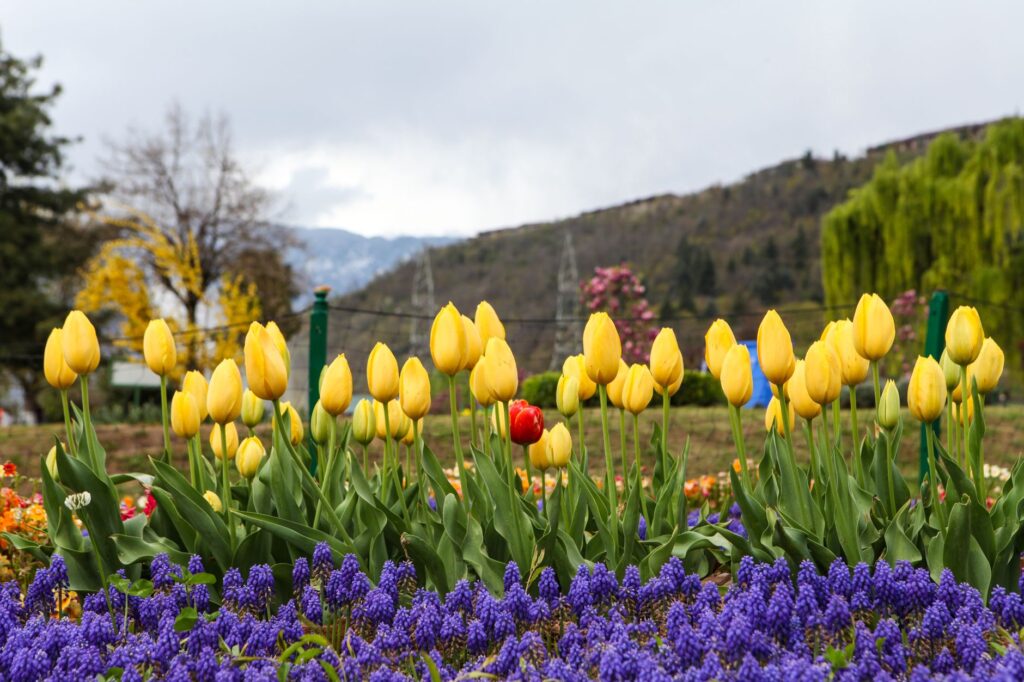
The Tulip Garden in Srinagar Kashmir reaches its most breathtaking peak bloom during the first two weeks of April, when over 1.5 million tulips burst into vivid colour across Asia’s largest tulip garden. If you’re planning a spring visit to Kashmir, timing your trip around this narrow window makes the difference between a good trip and an unforgettable one.
What Is the Indira Gandhi Memorial Tulip Garden?
Spread across 30 terraced hectares on the sun-facing foothills of the Zabarwan Range, the Indira Gandhi Memorial Tulip Garden overlooks the shimmering expanse of Dal Lake in a setting that feels almost implausibly beautiful. Established to promote floriculture and tourism in Jammu & Kashmir, the garden has grown into Asia’s single largest tulip garden — a record that still holds in 2026. During its short seasonal window, more than 68 varieties of tulips paint the hillside terraces in every shade from creamy white and butter yellow to deep violet and fire red.
The garden is located on Cheshma Shahi Road, Srinagar, at coordinates 34.1147° N, 74.8878° E — a short drive from the main Dal Lake boulevard and easy to reach by taxi or auto-rickshaw. Because it opens only during the annual Kashmir Tulip Festival, the experience feels genuinely exclusive: you cannot simply show up in summer or autumn and walk through.
Best Time to Visit the Tulip Garden in Srinagar Kashmir
The garden’s seasonal bloom is driven entirely by temperature and snowmelt patterns in the Zabarwan hills. Understanding those patterns is the key to planning the perfect visit.
The Peak Bloom Window: First Two Weeks of April
Based on years of observed bloom cycles, the first two weeks of April consistently deliver the richest, most complete display of colour. During this window, the majority of the 68-plus varieties are in simultaneous bloom, the terraces are fully green, and the mountain backdrop is often draped in the last patches of winter snow — creating a contrast that photographers travel thousands of kilometres to capture.
Arriving before April 1 can mean that early-flowering varieties are already fading while late-flowering ones have not yet opened. Arriving after April 14–15 risks finding the earliest beds dropping their petals, particularly if that year has experienced a warm March. The first two weeks of April strike the sweet spot.
Late March: Early Blooms for a Quieter Experience
The garden typically opens in late March — the 2027 season, for example, is expected to open on 16 March, following the historical pattern. In late March, early-season varieties such as single early and double early tulips begin flowering, offering a preview of what’s to come. Crowds are noticeably thinner at this stage, which makes it attractive for travellers who prefer space and calm over the full riot of colour. Morning light at this time of year is particularly soft and golden, ideal for photography.
Mid to Late April: The Final Act
By the third week of April, late-blooming varieties — often the taller, more dramatic Darwin hybrid and parrot tulips — reach their zenith. This is the last opportunity to see the garden before it closes for the season. Colour is still spectacular in patches, but you will notice some beds thinning. If your travel window only allows a mid-to-late April visit, go early in the morning when cooler temperatures keep blooms fresh and the light is flattering.
How Weather Shapes the Bloom Window
Kashmir’s spring weather is variable, and the bloom window shifts by roughly one to two weeks depending on the preceding winter and early spring temperatures. A harsh, prolonged winter followed by a cool March tends to delay the bloom, pushing peak colour closer to mid-April. Conversely, a mild winter with an early warm spell in late February or early March can advance the bloom, sometimes making late March as vivid as early April in a typical year.
Rainfall is a secondary factor. Light showers refresh the blooms and intensify colour, but persistent heavy rain can bruise petals and accelerate petal drop. Checking the India Meteorological Department’s Srinagar forecast in the week before your visit gives you the most reliable short-range picture of conditions.
Month-by-Month Bloom Summary
| Period | Bloom Status | Crowd Level | Best For |
|---|---|---|---|
| Late March | Early varieties opening; partial bloom | Low to moderate | Peaceful visits, early-bird photographers |
| First two weeks of April | Peak — majority of 68+ varieties in full bloom | High | Full colour experience, festivals, families |
| Third week of April | Late varieties peaking; early beds fading | Moderate | Late-blooming varieties, smaller crowds |
| After late April | Garden closes for the season | N/A | Not recommended — garden shut |
Garden Hours, Ticket Prices, and Practical At-a-Glance Facts
Planning around opening hours and entry costs helps you avoid unpleasant surprises at the gate. Here is everything you need in one place.
Opening Hours
The garden is open daily from 9:00 AM to 7:00 PM throughout the festival season, including weekends. Arriving at opening time (9:00 AM) is strongly recommended during the peak first two weeks of April — by 11:00 AM the pathways become busy, and by early afternoon the most photogenic spots can feel crowded.
Entry Ticket Prices
| Visitor Category | Ticket Price |
|---|---|
| Indian Adult | ₹100 |
| Indian Child (Under 12) | ₹50 |
| Foreign National | ₹400 |
| Professional Camera Fee | ₹150 |
Tickets can be purchased at the Ticket Window at the garden entrance, or booked in advance through the official online portal at floriculture.jk.gov.in. Online booking is worth using during the first two weeks of April when queues at the physical window can be long. The professional camera fee applies to DSLR and mirrorless cameras with interchangeable lenses; smartphones are included under the standard entry ticket.
How Long Should You Spend Here?
The average visit runs to about two hours, which is enough time to walk all the terraced sections at a relaxed pace, pause for photographs at multiple levels, and take in the Dal Lake views from the upper terraces. Budget an extra 30–45 minutes if you intend to explore the fountain areas and rest pavilions or have young children with you.
What to Expect Inside the Garden
The garden is laid out in a series of descending terraces carved into the hillside — seven main levels, each planted with different varieties and colour combinations. As you climb from the lower entrance toward the upper terraces, the panorama of Dal Lake and the distant Pir Panjal peaks gradually unfolds behind you. The design is intentional: every terrace offers a framed view of both the tulip beds below and the lake beyond.
Colour combinations are planned by the horticulture department each season, so the exact arrangement changes year to year. What remains constant is the sheer density — when conditions align in that first April fortnight, you are surrounded by an almost surreal carpet of colour in every direction. The fragrance at peak bloom, especially in the early morning when the air is cool and still, is something visitors consistently describe as memorable.
Facilities inside the garden include clean restrooms, a small food stall area near the entrance, and several designated photography spots with garden staff available to assist. The paths are paved and manageable for most visitors, though the climb between terraces involves steps that may require some effort for elderly visitors or those with mobility limitations.
Nearby Attractions to Combine With Your Visit
Because the garden sits on the shores of Dal Lake, it slots naturally into a half-day or full-day itinerary alongside several iconic Srinagar attractions. After spending your morning among the tulips, consider continuing to one or more of the following spots just minutes away.
- Dal Lake: Kashmir’s most famous lake is essentially on the garden’s doorstep. A shikara (traditional wooden boat) ride across Dal Lake in the late morning, after your garden visit, is one of the classic Kashmir experiences. The floating gardens, houseboats, and vendor shikaras offer a completely different kind of beauty from the tulip terraces.
- Nishat Bagh: Often called the “Garden of Bliss,” Nishat Bagh is a Mughal terraced garden just a short drive along the Dal Lake road. Its 12 terraces and mature chinar trees provide a historical and horticultural complement to the tulip garden’s spring spectacle.
- Pari Mahal: Sitting higher on the Zabarwan slope above Cheshma Shahi, Pari Mahal (“Angels’ Abode”) is a seven-terraced ruined garden with sweeping views over Dal Lake. It’s quieter than the main Mughal gardens and rewards visitors who want a more contemplative experience.
A half-day tour combining the Tulip Garden, Nishat Bagh, and a shikara ride on Dal Lake covers the essentials of Srinagar’s lakeside beauty in a single outing. A pre-booked taxi makes moving between these sites easy and avoids the delay of negotiating fares at the roadside during the busy festival period.
Photography Tips for Capturing the Best Shots
The Tulip Garden is one of Kashmir’s most photographed locations, and for good reason. Getting shots that stand out from the thousands posted online every season comes down to timing, angle, and light.
- Arrive at 9:00 AM sharp. The hour immediately after opening offers the softest light, the fewest crowds in your frame, and the freshest blooms before midday warmth begins to open petals fully and wilt early-morning dew.
- Shoot toward the lake. Position yourself on the upper terraces and frame the tulip beds in the foreground with Dal Lake and the mountains as a backdrop. This composition captures the unique geography that makes the garden distinct from any tulip field in the Netherlands or elsewhere.
- Get low. Crouching to tulip height and shooting across a bed of flowers toward the mountain sky creates immersive images that convey scale and colour far more effectively than overhead or standing-height shots.
- Pay the professional camera fee. At ₹150, the fee for bringing a DSLR or mirrorless camera is a minor cost for the quality of images you can take with a proper lens. Wide-angle lenses work beautifully on the terraces; a short telephoto (85–135mm equivalent) isolates individual blooms with creamy bokeh.
- Visit on an overcast day. Bright sunshine creates harsh shadows in dense flower beds. An overcast or lightly cloudy sky acts as a giant diffuser, producing even, saturated colour across the whole terrace — the kind of light that makes reds glow and yellows sing.
Getting to the Tulip Garden in Srinagar
The garden’s address is Cheshma Shahi Road, Srinagar, Jammu & Kashmir — 190001. It sits on the eastern shore of Dal Lake, roughly 8 kilometres from the city centre and Lal Chowk. Practical transport options include:
- Pre-booked taxi: The most comfortable and time-efficient option, particularly during the festival period when parking near the garden is limited. A taxi can drop you directly at the entrance and return for pickup at a fixed time.
- Auto-rickshaw: Available from the Dal Lake boulevard and city centre; negotiate the fare before boarding and confirm the driver knows the Cheshma Shahi Road entrance, not the upper Cheshma Shahi spring.
- Shared sumo / minibus: Budget-friendly but less direct; these services run along the main lake road and may require a short walk from the nearest stop.
Parking for private vehicles exists near the garden but fills quickly by mid-morning during peak festival weeks. If you are driving, arriving before 9:30 AM significantly improves your chances of finding a spot.
Book a Kashmir Tour Package Built Around the Tulip Season
Visiting the Tulip Garden is most rewarding when it forms part of a wider Kashmir itinerary that also takes in Gulmarg, Pahalgam, Sonamarg, and the Dal Lake houseboat experience. A well-structured package removes the logistical pressure of booking individual taxis, hotels, and activities during what is Kashmir’s busiest tourism season. If you would like expert help planning your spring Kashmir trip — including guaranteed transport to the Tulip Garden at peak bloom time — explore Kashmir Tulip Special Packages here.
Ready to book or have questions about the best travel dates for your group? Call Kashmir Tour Packages Taxi at 9149531004 — the team can advise on exact bloom forecasts as the season approaches, recommend the right package duration, and arrange airport transfers, houseboat stays, and taxi services throughout your Kashmir visit.
Frequently Asked Questions
When does the Tulip Garden in Srinagar open each year?
The garden opens annually in conjunction with the Kashmir Tulip Festival, typically in late March. The exact opening date varies by a few days each year depending on bloom readiness. The 2027 season is expected to open around 16 March, following the historical pattern. For the current season, check the official J&K Floriculture Department website or the garden’s social media channels in early March.
How many days in advance should I book my Kashmir trip for the Tulip Festival?
For travel during the first two weeks of April — the peak bloom window — booking flights, houseboats, and hotel accommodation at least 6 to 8 weeks in advance is strongly advisable. This is Kashmir’s single busiest tourism period of the year, and quality accommodation fills quickly. Taxi packages for the Tulip season are best reserved similarly early.
Is the Tulip Garden suitable for young children?
Yes, the garden is family-friendly and children under 12 enter at the reduced price of ₹50. The paved paths between terraces are manageable for older children, though the steps between terrace levels require some supervision for toddlers. Strollers can be used on the flat sections but are difficult to manage on the staircases. Early morning visits are especially pleasant for families, as cooler temperatures and thinner crowds make the experience more comfortable for young ones.
What is the professional camera fee, and does it apply to smartphones?
The professional camera fee is ₹150 and applies to DSLR and mirrorless cameras with interchangeable lenses. Smartphones, point-and-shoot cameras, and action cameras are covered under the standard entry ticket and do not attract an additional fee. Tripods are generally permitted but should be used considerately to avoid blocking pathways during busy periods.
Can I visit the Tulip Garden and Dal Lake on the same day?
Absolutely, and most visitors do exactly this. The garden sits on the eastern shore of Dal Lake, making it straightforward to combine both attractions in a single half-day or full-day outing. A popular sequence is to visit the garden at opening time (9:00 AM), spend two hours walking the terraces, and then head down to the lake boulevard for a shikara ride before lunch. Nishat Bagh and Pari Mahal can be added in the afternoon to round out a complete lakeside day.
Does rain affect the tulip bloom or ruin a visit?
Light rain is actually beneficial for tulips — it refreshes the blooms, deepens colour saturation, and keeps the garden looking its best. A visit on a lightly overcast or drizzly day often produces better photographs than a harsh sunny afternoon. Heavy sustained rainfall over multiple days can bruise petals and accelerate petal drop, particularly for the more delicate parrot and fringed varieties. Check the short-range forecast before you go, and carry a compact waterproof jacket regardless, as spring weather in Srinagar can change quickly.
Is online ticket booking available for the Tulip Garden?
Yes. Tickets can be booked online through the official J&K Floriculture Department portal at floriculture.jk.gov.in. Online booking is particularly useful during the first two weeks of April when queues at the physical ticket window can be lengthy. Walk-in tickets are also available at the garden’s ticket window on the day of your visit, subject to daily capacity.
What is the overall visitor rating for the Tulip Garden?
The Indira Gandhi Memorial Tulip Garden carries an average visitor rating of 4.5 out of 5 based on over 17,655 reviews, reflecting its status as one of the most consistently praised attractions in Jammu & Kashmir. Visitors most frequently highlight the scale and variety of the blooms, the Dal Lake backdrop visible from the upper terraces, and the overall organisation of the festival grounds.
A Few Final Tips Before You Go
- Wear comfortable walking shoes. The terraced paths involve repeated climbing and descending on paved but sometimes uneven surfaces. Trainers or sturdy sandals are far more practical than formal footwear or flip-flops.
- Carry cash. While online ticket booking is available, vendors inside the garden — including small food stalls — typically operate on a cash basis. ATMs near the garden can have queues during the festival period, so carry sufficient rupees from the city.
- Dress in layers. Early April mornings in Srinagar can be cool (around 8–12°C at 9:00 AM), warming to a pleasant 18–22°C by midday. A light fleece or shawl that you can tie around your waist as the day warms is ideal.
- Respect the blooms. Stepping into flower beds for photographs is prohibited and damages the planting. Garden staff are present across the terraces and will politely but firmly redirect visitors who stray from the paths.
- Visit on a weekday if possible. Weekends during the festival, particularly the second Saturday and Sunday of April, draw the largest crowds. A Tuesday or Wednesday visit during the same peak bloom period offers the same colour with noticeably fewer people.
- Plan for return transport. Taxis and auto-rickshaws near the garden entrance charge premium fares during the festival period, particularly in the busy 11:00 AM to 2:00 PM window. Pre-booking your return taxi through a trusted operator avoids both the cost and the wait.
The Bigger Picture: Why the Tulip Garden Matters to Kashmir Tourism
The Indira Gandhi Memorial Tulip Garden is more than a seasonal attraction — it is the event that signals the reopening of Kashmir to spring travellers after the quieter winter months. The annual Tulip Festival draws visitors from across India and from abroad, injects significant economic activity into Srinagar’s houseboat and hotel sector, and showcases the valley’s horticultural heritage in a format that resonates with a wide audience. For many first-time visitors to Kashmir, the tulip terraces are the image that first captures their imagination — and standing among those flowers, with the Zabarwan Range rising behind and Dal Lake glittering below, rarely disappoints.
Planning your visit with accurate timing information — understanding that the first two weeks of April represent the true peak, that late March offers a quieter preview, and that the exact window shifts with each year’s weather — is the single most important factor in making your trip everything you hope it will be.
Garden details and ticket prices are accurate as of 2026. Seasonal opening dates and bloom windows are subject to annual variation based on weather conditions. Always verify the current season’s opening date through the official J&K Floriculture Department channels before finalising your travel plans.
Related: complete Tulip Garden Srinagar visitor guide
Related: plan a Kashmir tulip bloom tour package
Related: book your Tulip Garden entry tickets in advance
Part of our complete guide: Best Tulip Garden Taxi Service Srinagar: 7 Reasons to Book Now
Book this experience
📋 Get In Touch
Fill in your details — our team will confirm within 2 hours.

I'm Suhail Ahmad, born and raised in Srinagar. In 2022 I founded Kashmir Tour Packages Taxi — a licensed taxi and tour operator registered with the Jammu & Kashmir Tourism Department — because I saw too many visitors arrive in Kashmir with bad information, unreliable drivers, and no idea what was actually worth seeing.
Every article I write comes from personal experience on these routes: the correct season to visit Thajiwas Glacier, the checkpoints you'll cross on the way to Gulmarg, where the road to Betaab Valley gets narrow, what Amarnath Yatra pilgrims actually need to know before they book a taxi. I don't write from Wikipedia. I write from having driven these roads myself, with guests in the back seat.
Our fleet covers Srinagar, Gulmarg, Pahalgam, Sonamarg, Doodhpathri, Yusmarg, Amarnath, and long-haul routes to Leh and Jammu under All India Tourist Vehicle Permits. If something I've written about a route, price, or season seems off — call me directly on +91 9149531004. I answer that number myself.
- J&K Tourism Dept — Registered Tour Operator