
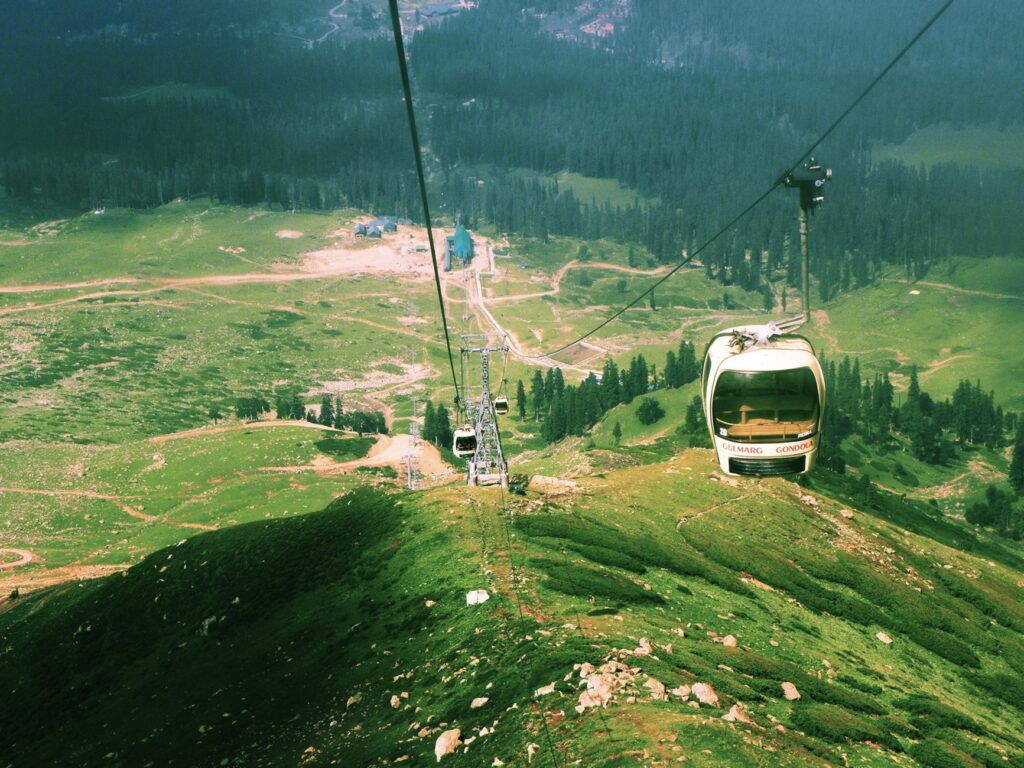
The Gulmarg Gondola is one of the highest and most breathtaking cable car rides in the world, and choosing the right phase or ticket combination can make or break your visit. Whether you are a first-time tourist, a skier, or a seasoned Himalayan explorer, this guide walks you through every option so you can decide with complete confidence before you reach the ticket window.
What Is the Gulmarg Gondola?
Perched in the meadows of Gulmarg in Jammu & Kashmir, the Gulmarg Gondola is a two-phase ropeway system that lifts visitors from the lush alpine bowl of Gulmarg up to the snow-laden ridges of Apharwat Peak. Phase 1 begins at Gulmarg at an elevation of 2,650 metres and rises to Kongdoori at 3,088 metres. Phase 2 then continues from Kongdoori all the way to Apharwat Peak at 3,979 metres — a height where the air is noticeably thin, the panorama is staggering, and snow can linger well into the summer months.
Beyond the two main gondola phases, there is also a chairlift at Kongdoori known as Mary’s Shoulder, which offers a gentler ridge-line experience and is especially popular with families and casual visitors who want a taste of the higher altitude without committing to the full ascent.
The gondola is operated by Jammu & Kashmir Cable Car Corporation and is rated 4.4 out of 5 based on over 8,135 reviews, making it one of the most consistently praised attractions in the entire Kashmir Valley. You can check official schedules and availability on the J&K Cable Car Corporation official website.
Gulmarg Gondola Ticket Prices at a Glance
Understanding the ticketing structure before you arrive will save you time, money, and stress. All prices are in Indian Rupees (INR) and cover return journeys unless otherwise stated.
| Option | Price (INR) |
|---|---|
| Phase 1 — Gulmarg to Kongdoori (Return) | ₹800 |
| Phase 2 — Kongdoori to Apharwat Peak (Return) | ₹1,000 |
| Phase 1 + Phase 2 Combined (Return) | ₹1,800 |
| Kongdoori Chairlift / Mary’s Shoulder (One Way) | ₹400 |
| Kongdoori Chairlift / Mary’s Shoulder (Return) | ₹600 |
If you plan to ride both phases, buying the combined Phase 1 + Phase 2 ticket at ₹1,800 is the most straightforward option and eliminates any queue at the Kongdoori intermediate station.
Operating Hours You Need to Know
Timing your visit around the gondola’s operating schedule is critical, especially for Phase 2, which has a shorter window. Arriving late often means being turned away even if you hold a ticket, since the operators enforce cut-off times strictly for safety reasons.
| Segment | Operating Hours |
|---|---|
| Phase 1 — Gulmarg to Kongdoori | 9:00 AM to 4:00 PM |
| Phase 2 — Kongdoori to Apharwat Peak | 10:00 AM to 3:00 PM |
| Kongdoori Chairlift (Mary’s Shoulder) | 9:00 AM to 3:00 PM |
A practical rule: if you want to ride both phases comfortably and spend meaningful time at Apharwat Peak, aim to be at the Phase 1 boarding point no later than 9:30 AM. Phase 2 boarding is last admitted well before 3:00 PM, and the high altitude means you will want time to acclimatise, look around, and descend without rushing.
Maintenance Closures
The Gulmarg Gondola remains closed on the 2nd and 4th Monday of every month for scheduled preventive maintenance. This is a firm closure regardless of weather, so check the calendar before booking your transport or accommodation around a Monday visit.
Which Phase Should You Choose?
This is the most common question visitors ask, and the honest answer depends on three things: your purpose, your physical condition, and the season. Here is how to think it through.
Choose Phase 1 Only If…
- You are travelling with young children or elderly family members who may find the higher altitude uncomfortable.
- You want a scenic cable car experience without intense physical exertion.
- You are visiting primarily to see the meadows of Kongdoori and enjoy photography or a short walk.
- You are on a tight schedule and have under two hours at Gulmarg.
- Weather conditions are partially cloudy — Phase 2 may be closed during poor visibility.
Choose Phase 2 (or the Combined Ticket) If…
- You are a skier or snowboarder — Apharwat Peak is where the serious ski slopes begin.
- You want to stand at nearly 4,000 metres and see the full Himalayan panorama including Nanga Parbat on clear days.
- You are fit, acclimatised to altitude, and carry basic supplies such as water and a warm layer.
- You are visiting in summer and want to touch snow that persists year-round on the upper ridges.
- You are a trekker using the gondola as a starting point for Apharwat ridge trails.
Consider the Chairlift If…
- You have already done Phase 1 and want a different perspective at Kongdoori.
- Weather has stopped Phase 2 but you still want to gain elevation.
- You prefer an open-air seated experience rather than an enclosed gondola cabin.
Seasonal Guide — Best Time to Ride Each Phase
The gondola operates year-round, subject to weather, but each season offers a different experience. Phase 2 may remain closed during heavy snowfall or off-season maintenance periods, so checking current status before travelling is always recommended.
Winter (December to February)
This is peak ski season. Apharwat Peak is blanketed in several metres of snow, and professional skiers from across the world converge on Gulmarg during these months. The gondola sees its highest demand in winter, and queues can stretch for hours. Booking tickets online in advance through the official J&K Cable Car portal is strongly advised. Dress in thermal layers — temperatures at Apharwat can drop to minus 15°C or lower.
Spring (March to May)
Snow is still present at Phase 2 but conditions are gentler. The meadows of Gulmarg begin to bloom, and the combination of green lower slopes and white upper peaks makes for extraordinary photography. Crowds thin out compared to peak winter, making this an excellent window for a relaxed visit.
Summer (June to August)
Gulmarg’s meadows are at their most vivid. Phase 1 is consistently operational, and Phase 2 is open most days. The temperature at the base is pleasantly cool, around 15–20°C, though Apharwat Peak can still be cold. Summer is popular with families and domestic tourists escaping the Indian plains’ heat.
Autumn (September to November)
The crowds reduce significantly, the air is clear, and visibility for the Himalayan panorama is often at its best. Early snowfall can begin in October at higher elevations, and Phase 2 may face intermittent closures by November. This is a preferred time for photographers and trekkers.
How to Book Your Gulmarg Gondola Tickets
There are two ways to secure your tickets: online in advance, or at the counter on the day.
Online Booking
The official booking portal is operated by the Jammu & Kashmir Cable Car Corporation at jammukashmircablecar.com. Advance online booking is highly recommended during peak seasons (December to February and June to August) when walk-in queues can mean a wait of two to four hours. You will receive a confirmation that you present at the gondola boarding gate.
Counter Booking
Tickets can be purchased at the Gulmarg base station ticket counter. If you are visiting during the off-season or on a weekday, counter tickets are usually available without significant waiting. Carry a valid photo ID — it is required for all passengers.
Step-by-Step Booking Process
- Decide which phase or combination you want based on the guide above.
- Check the J&K Cable Car Corporation website for any maintenance closures on your travel date.
- Book online at least 48–72 hours before your visit during peak season.
- Arrive at the Gulmarg base station with your confirmation and a valid photo ID.
- Proceed to the designated boarding queue for Phase 1. Combined ticket holders proceed directly through Kongdoori to the Phase 2 cabin.
- At Apharwat Peak or Kongdoori, keep your return ticket safe — you will need it for the descent.
Practical Tips Before You Board
A few simple preparations will make your gondola experience significantly more comfortable and safe.
- Dress in layers: Even in summer, Apharwat Peak at 3,979 metres can be bitterly cold and windy. A windproof jacket, gloves, and a warm mid-layer are essential for Phase 2 visitors.
- Carry water and snacks: There are limited food stalls at Kongdoori and at the Apharwat summit, but prices are high and options are limited. Pack your own supplies.
- Acclimatise before Phase 2: If you have just arrived in Gulmarg, spend an hour or two walking around at the base before ascending to nearly 4,000 metres. Altitude sickness is real and can affect people who ascend too quickly.
- Wear sunscreen: UV radiation is significantly stronger at altitude. Apply SPF 50+ even on overcast days.
- Keep children close: The terrain at Apharwat Peak is rocky and steep in summer and icy in winter. Supervise children carefully beyond the gondola exit platform.
- Hire a local guide for trekking: If you intend to walk any of the ridgeline trails from Apharwat, do not go alone. Conditions change rapidly, and local guides know the terrain.
- Check the weather the morning of your visit: Phase 2 is suspended during low cloud, heavy snowfall, or high winds. A clear morning at Gulmarg does not guarantee clear conditions at 3,979 metres.
What to Expect on the Ride
The Phase 1 gondola cabin accommodates around 20–25 passengers and takes approximately 15–20 minutes to travel from Gulmarg to Kongdoori. The ride is smooth, gliding over pine forests and open meadows. As you gain elevation, the village of Gulmarg shrinks below and the surrounding Himalayan ridges begin to reveal themselves.
At Kongdoori, you step out into a wide alpine bowl. In winter it is a ski assembly area; in summer it is a gentle grassy plateau with food stalls and pony operators. The air is noticeably fresher here, and many visitors spend 30–45 minutes simply sitting and absorbing the view before boarding Phase 2.
Phase 2 is a more dramatic ride. The cabin climbs steeply over rocky scree and permanent snowfields, and the panorama opens up dramatically as you approach Apharwat Peak. On clear days you can see deep into Pakistani-administered territory and, on exceptionally clear winter days, the outline of Nanga Parbat. The total duration of a round trip covering both phases, including time at the top and at Kongdoori, is approximately two hours — which aligns with the gondola’s listed duration of PT2H for planning purposes.
Gulmarg Gondola vs. Alternatives in the Region
If for any reason the gondola is closed or you are looking for complementary experiences, there are a few alternatives worth considering.
Pony Rides to Kongdoori
Local pony operators offer rides from the Gulmarg meadow up to Kongdoori along forest trails. It is slower, more physical, and less reliable in bad weather, but offers a traditional and immersive way to experience the landscape. This is best as a complement to the gondola rather than a replacement.
Skiing and Snow Activities at Gulmarg Base
If Phase 2 is closed due to snow or wind, the Gulmarg base area and Kongdoori still offer sledging, snow tubing, and ski lessons for beginners. These are operated by independent vendors and do not require gondola access.
Trekking in the Gulmarg Area
Several trekking routes radiate from Gulmarg, including the route to Alpather Lake near Apharwat Peak. These are accessible with or without the gondola, though using the gondola for the ascent and trekking down is a popular and practical combination.
Getting to Gulmarg
Gulmarg is approximately 56 kilometres from Srinagar, and the drive takes around 90 minutes to two hours depending on traffic and road conditions. The road rises steeply in its final stretch and is generally well-maintained year-round, though snow chains or four-wheel drive may be needed in heavy winter snowfall.
Most visitors travel from Srinagar by private cab or as part of a Kashmir tour package. There is no direct public bus service that conveniently connects Srinagar to Gulmarg, so arranging private transport in advance is strongly recommended, particularly if you intend to reach the gondola before 9:30 AM.
Plan Your Gulmarg Gondola Visit with Kashmir Tour Packages Taxi
Planning a trip to Gulmarg involves more than just buying a gondola ticket — it means coordinating transport from Srinagar, timing your arrival correctly, checking for maintenance closures, and making sure you have the right gear for the altitude. If you would like expert local help putting it all together, call Kashmir Tour Packages Taxi at 9149531004. The team can arrange your cab from Srinagar to Gulmarg, advise on the best day to visit based on current conditions, and help you build a complete Kashmir itinerary around your gondola experience.
Frequently Asked Questions
Is the Gulmarg Gondola open every day?
The gondola operates every day of the week but remains closed on the 2nd and 4th Monday of every month for preventive maintenance. It is also subject to closure during heavy snowfall, high winds, or other adverse weather conditions. Always verify current status on the official J&K Cable Car Corporation website before travelling.
Do I need to book tickets in advance?
During peak seasons — particularly December to February and June to August — advance online booking is strongly recommended. Walk-in queues during these periods can be two to four hours long. During the off-season, same-day counter tickets are usually available without significant waiting.
What is the difference between Phase 1 and Phase 2?
Phase 1 runs from Gulmarg (2,650m) to Kongdoori (3,088m) and costs ₹800 return. Phase 2 continues from Kongdoori to Apharwat Peak (3,979m) and costs ₹1,000 return. The combined ticket for both phases costs ₹1,800. Phase 2 reaches a significantly higher altitude with more dramatic scenery and is where the main ski slopes are located.
Is Phase 2 suitable for children?
Phase 2 is suitable for older children who are in good health and not susceptible to altitude-related discomfort. However, parents should exercise caution — the altitude at Apharwat Peak (3,979m) can cause mild symptoms such as headache, nausea, or breathlessness in some individuals, including children. If your child has any respiratory or cardiac conditions, consult a doctor before ascending to Phase 2.
What should I wear on the gondola?
For Phase 1, comfortable walking clothes and a light jacket are usually sufficient in the warmer months. For Phase 2, dress in warm layers regardless of the season — a thermal base layer, a fleece or down mid-layer, a windproof outer shell, gloves, and a hat are all recommended. Sturdy closed-toe shoes or boots are preferable to sandals or open footwear.
Can I ski from the gondola?
Yes. Apharwat Peak accessed via Phase 2 is the primary skiing terrain in Gulmarg and one of the best ski destinations in Asia. Ski equipment rental and lessons are available at both the Kongdoori and Apharwat levels. Beginners are advised to start with instructors at the Kongdoori level before venturing to the steeper runs at Apharwat.
What is the Kongdoori Chairlift?
The Kongdoori Chairlift, also known as Mary’s Shoulder, is an open-air seated chairlift operating at Kongdoori station. It runs from 9:00 AM to 3:00 PM and costs ₹400 one way or ₹600 return. It offers a different vantage point along the ridge and is a good option if Phase 2 is closed or if you prefer a more open-air experience.
How long does the full gondola experience take?
A complete round trip covering both Phase 1 and Phase 2, including a reasonable amount of time to look around at Kongdoori and at Apharwat Peak, takes approximately two hours. If you plan to ski, trek, or spend extended time at the summit, allow considerably more time and ensure you board Phase 2 early enough to descend before the 3:00 PM cut-off.
Is the gondola accessible for people with mobility challenges?
The gondola cabins themselves are accessible by most standards — passengers board from a platform and the cabin doors are wide enough for most mobility needs. However, the terrain at Kongdoori and especially at Apharwat Peak is uneven, steep, and can be icy or muddy depending on the season. Visitors with significant mobility challenges may find the areas beyond the gondola exit difficult to navigate without assistance.
Location and Key Details
The Gulmarg Gondola base station is located on Alambal Road, Gulmarg, Jammu & Kashmir — PIN 193403. The coordinates are 34.0484° N, 74.3805° E. If you are using a navigation app, searching for “Gulmarg Gondola” or “Gulmarg Ropeway” will direct you to the correct boarding area at the edge of the Gulmarg meadow.
Information on this page reflects 2026 operating conditions. Ticket prices, operating hours, and closure schedules are subject to change by the Jammu & Kashmir Cable Car Corporation. Always confirm current details at jammukashmircablecar.com before your visit.
Book this experience
📋 Get In Touch
Fill in your details — our team will confirm within 2 hours.

I'm Suhail Ahmad, born and raised in Srinagar. In 2020 I founded Kashmir Tour Packages Taxi — a licensed taxi and tour operator registered with the Jammu & Kashmir Tourism Department — because I saw too many visitors arrive in Kashmir with bad information, unreliable drivers, and no idea what was actually worth seeing.
Every article I write comes from personal experience on these routes: the correct season to visit Thajiwas Glacier, the checkpoints you'll cross on the way to Gulmarg, where the road to Betaab Valley gets narrow, what Amarnath Yatra pilgrims actually need to know before they book a taxi. I don't write from Wikipedia. I write from having driven these roads myself, with guests in the back seat.
Our fleet covers Srinagar, Gulmarg, Pahalgam, Sonamarg, Doodhpathri, Yusmarg, Amarnath, and long-haul routes to Leh and Jammu under All India Tourist Vehicle Permits. If something I've written about a route, price, or season seems off — call me directly on +91 9149531004. I answer that number myself.
- J&K Tourism Dept — Registered Tour Operator
Peak rates starting ₹900 · Valid until September 30, 2026