
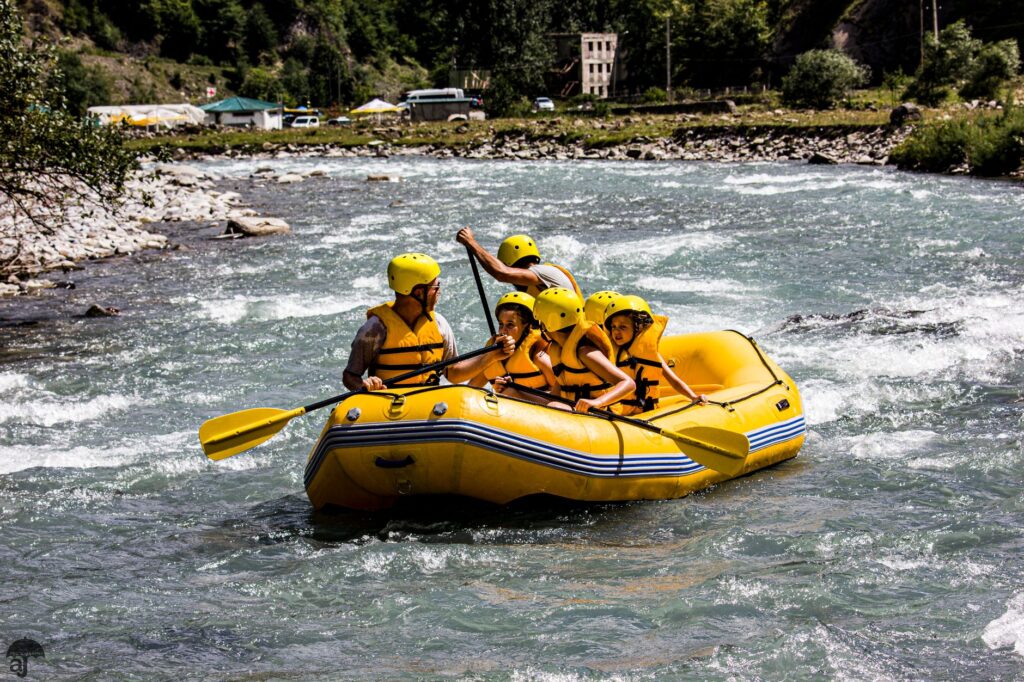
Guided river rafting in Pahalgam on the Lidder River is one of the most exhilarating outdoor experiences Kashmir has to offer in 2026. The Lidder flows through a breathtaking Himalayan valley, carving its way past pine forests, alpine meadows, and ancient shepherd trails — making every bend in the river as visually stunning as it is adventurous.
The Lidder River: Geography, Origin, and Character
The Lidder River originates high in the Great Himalayan Range, fed by glaciers and snowfields that stretch above the famous Kolahoi Glacier — one of the largest glaciers in the Kashmir Valley. From its icy source at roughly 4,000 metres above sea level, the river descends rapidly through the Pahalgam valley before merging with the Sind River near Khanabal, eventually joining the Jhelum south of Anantnag.
What makes the Lidder distinctive among Kashmir’s rivers is its dual personality. In its upper reaches near Aru and Lidderwat, it is a quiet, crystalline stream flanked by wildflower meadows and grazing nomads. By the time it reaches the main Pahalgam market and the stretches around Varganpal and Yenner Bridge, it has gathered speed and volume, churning through boulder gardens and rocky narrows that create the rapids responsible for the river’s reputation as a rafting destination.
The river’s water temperature stays near-freezing even at the height of summer. This is not lake or spring water — it is direct glacial meltwater, and it remains bone-chillingly cold regardless of the air temperature above. That extreme cold is part of what makes the Lidder so pristine: minimal bacterial growth, exceptional clarity, and a bright turquoise-green colour visible right through to the riverbed on calm stretches.
Why the Lidder River Is a Landmark Destination in Kashmir
Pahalgam has been a celebrated destination since the Mughal era, when Emperor Jehangir famously described the Kashmir Valley as paradise on earth. The Lidder River was central to that appreciation. Today, the river remains the geographic and emotional heart of Pahalgam for several reasons.
- Scenic continuity: Unlike many adventure rivers hemmed in by gorges, the Lidder flows through open, wide valleys for much of its course, giving rafters, walkers, and photographers unobstructed views of snow-capped peaks at almost every turn.
- Ecological richness: The riverbanks are home to Himalayan brown trout, a species carefully protected under J&K fisheries regulations. Herons, kingfishers, and occasional grey wagtails are common sights along the water’s edge.
- Cultural significance: The Lidder is a pilgrimage artery. Every year during the Amarnath Yatra, hundreds of thousands of devotees travel along routes that shadow the river for much of the journey toward the holy cave shrine.
- Trekking gateway: The Lidder Valley forms the main approach to iconic treks including Aru–Lidderwat–Kolahoi Glacier and the Tarsar–Marsar lake circuit, making the river inseparable from the wider adventure ecosystem of South Kashmir.
Key Scenic Spots and Viewpoints Along the Lidder
Pahalgam Main Bridge and Market Ghats
The most accessible introduction to the Lidder is right in the heart of Pahalgam town, where the river rushes below the main road bridge. In the early morning, when mist rolls off the water and the surrounding peaks glow in the first light, this stretch is genuinely spectacular. Locals wash vegetables and fill vessels here — a reminder that the Lidder is not just a tourist attraction but a living river woven into everyday Kashmiri life.
Varganpal Bridge (Rafting Base Area)
Varganpal Bridge is the primary launching point for river rafting operations and doubles as one of the best riverside viewpoints in Pahalgam. Standing on or near the bridge, you can observe the river changing character in real time — glassy pools giving way to white-water chutes within a few hundred metres. The surrounding pine forest reflects off the slower sections, creating mirror images broken only by the occasional raft passing beneath.
Yenner Bridge Area
A short distance downstream from Varganpal, Yenner Bridge marks another significant staging area used by rafting operators. The rocky outcrops near this bridge are popular with local photographers and visitors who prefer to watch the action from the bank. The perspective from the bridge parapet looking upstream frames a classic shot of the Lidder with Himalayan ridgelines in the background.
Aru Valley — Upper Lidder
About 11 kilometres from Pahalgam town, the village of Aru sits in the upper Lidder Valley where the river is young, shallow, and almost impossibly clear. This is the Lidder before the rapids — a meadow stream perfect for paddling, fishing (with a permit), or simply sitting on a boulder with the sound of running water as your only company. The drive from Pahalgam to Aru follows the river the entire way and is a scenic journey in itself.
Betaab Valley
Named after the 1983 Bollywood film shot here, Betaab Valley lies along the Lidder about 15 kilometres from Pahalgam. The valley floor is carpeted with green meadows, ringed by dense deodar forests, and cut through by a vigorous tributary of the Lidder. It is one of the most photographed landscapes in the entire Kashmir Valley and sees extremely high visitor traffic during peak season.
Guided River Rafting in Pahalgam: What It Involves
The Lidder’s rapids between Varganpal and downstream stretches are classified from Grade I to Grade III — a range that makes the river genuinely accessible to beginners while still delivering meaningful adrenaline moments for more experienced paddlers. The rapids are fast enough to create real spray and excitement; the flat sections between them allow guides to brief the group, rest, and take in the extraordinary scenery rolling past on both sides.
All commercial rafting operations on the Lidder are required to be registered with the J&K Tourism Department and the Pahalgam Development Authority (PDA). Legitimate operators are based around Varganpal and Yenner Bridge and must employ guides holding certified rescue qualifications. Safety equipment — helmets, high-buoyancy life jackets, and paddles — is provided as standard for every participant.
Rafting Route Options and Duration
| Route | Distance | Duration | Price (INR) |
|---|---|---|---|
| Lidder Joy Ride | 2.5 km | 20 to 30 minutes | ₹600 |
| Lidder Long Ride | 5 km | 45 minutes to 1 hour | ₹1,350 |
| Extra Long Ride | 12 km | 1.5 to 2 hours | ₹1,500 |
The Joy Ride is ideal for children, first-timers, or anyone primarily interested in the river experience and scenery. The Long Ride covers a more varied section of the Lidder with a greater concentration of rapids. The Extra Long Ride at 12 kilometres is the most immersive option, pushing deep into quieter valley stretches beyond the main rapids cluster and offering the highest proportion of wilderness river time per rupee spent.
Operating Hours and Season
Rafting on the Lidder operates from April through September, weather and water levels permitting. Sessions run daily from 8:00 AM to 5:00 PM (booking closes at 5:00 PM). The activity is available all seven days of the week throughout the season. Operations remain weather-dependent — flash rain, rapidly rising water levels, or dangerous upstream conditions can and do lead to cancellations at short notice, even within an otherwise fine day.
Best Time to Visit the Lidder River
The Lidder is worth visiting in every month that Pahalgam is accessible, but the experience changes dramatically with the season.
- April–May: Snow is still visible on the peaks, the river runs high and fast with spring snowmelt, wildflowers are erupting along the banks, and crowds are manageable. This is the most visually dramatic period but also the coldest water temperature and most powerful current of the rafting season.
- June–July: Peak tourist season coincides with the Amarnath Yatra. The valley is at its greenest, the weather is warm and pleasant at altitude, and rafting conditions are excellent. Expect higher visitor numbers at all riverside spots.
- August–September: The Lidder Valley quiets slightly after the Yatra concludes. September in particular offers golden light, clear skies, and the first hints of autumn colour in the chinar and poplar trees along the banks. Water levels begin to drop, making some sections calmer and ideal for families.
- October onwards: Commercial rafting ends as temperatures plummet and water levels drop too low for safe operations. The river in winter is beautiful but the valley roads can become treacherous.
Morning vs. Afternoon on the River
The timing of your visit matters more than most people realise. Because the Lidder is fed by glacial melt, morning sessions — typically before noon — feature calmer, clearer, lower water levels. Overnight temperatures reduce melt from the upper snowfields, so the river arrives at Pahalgam in a relatively settled state. By early afternoon, peak daytime sun drives rapid snowmelt at higher elevations, increasing water volume and turbulence downstream within a matter of hours. Morning is generally recommended for families and beginners; afternoon sessions are naturally more intense.
Practical Tips for Visiting and Rafting the Lidder River
What to Wear
Standard rafting operators do not provide wetsuits. Because Lidder water is glacially cold — close to freezing even in midsummer — you must dress for immersion, not just splashing. Wear quick-dry synthetic or wool base layers underneath the provided life jacket. Cotton is a poor choice; it stays wet and accelerates heat loss. Bring a change of dry clothes for afterward.
Cameras and Electronics
Action cameras are welcome, but only when securely mounted with a professional helmet strap or chest harness with a floating tether. Handheld selfie sticks and loose phones are strictly not permitted. An unexpected impact from a Grade II or III rapid can cause an instant, unrecoverable loss of grip — and a phone in the Lidder is gone for good.
Eyewear
Prescription glasses and contact lens wearers can participate, but glasses must be secured with a tight retention strap. The glacial spray during rapids is intense and persistent. Unsecured glasses will wash away; contact lenses will be dislodged by spray and water splashes.
Weight and Health Considerations
Standard life jackets accommodate most body types, but participants weighing over 110 kg (242 lbs) whose body proportions prevent the jacket from locking securely may be restricted from participating for safety reasons. Individuals with severe cardiovascular conditions, uncontrolled high blood pressure, severe asthma, epilepsy, or recent spinal or orthopaedic surgeries should not raft on the Lidder. Pregnancy is an absolute contraindication — the cold water, physical impact, and risk of ejection make white-water rafting unsafe under any circumstances during pregnancy.
Safety Protocols Mid-River
Professional guides carry whistles and communication devices linked to riverbank teams stationed at intervals through the valley. If sudden rain upstream causes muddy discolouration of the water, rapidly rising levels, or dangerous turbulence changes, guides are trained to steer immediately to designated evacuation extraction points along the Lidder bank. This infrastructure is why choosing a certified, PDA-registered operator is not optional — it is the difference between a managed adventure and an unacceptable risk.
Getting to the Lidder River from Srinagar
Pahalgam is approximately 95 kilometres from Srinagar city, a journey that typically takes between 2 and 2.5 hours by road via the NH44 through Anantnag. The route is well-maintained and passes through the agricultural heartland of the Kashmir Valley before climbing into the Lidder Valley proper. Private taxis from Srinagar are the most comfortable and flexible option, allowing you to stop at viewpoints, visit Anantnag’s springs, or adjust your pace. Shared taxis and bus services also operate from Anantnag town to Pahalgam for budget travellers.
For authoritative route and road condition information in Jammu & Kashmir, the official J&K Tourism website publishes seasonal updates, Yatra advisories, and registered operator listings relevant to Pahalgam.
The Lidder River for Non-Rafters: Walking, Photography, and Simply Being There
It would be a mistake to frame the Lidder purely as a rafting river. A large proportion of visitors to Pahalgam engage with it on foot, by horseback, or simply by sitting on its banks. The riverside walking path that winds from the main Pahalgam market area toward Baisaran and Chandanwari passes alongside or within earshot of the river for much of its length. Photography enthusiasts will find extraordinary material in the early morning light when mist rises off the water and the forest behind is still in shadow.
Fly fishing for Himalayan brown trout is a regulated activity available along designated sections of the Lidder with a permit obtained through the J&K Fisheries Department. It is one of the quietest and most contemplative ways to spend a day on this river — standing knee-deep in gin-clear, near-freezing water, surrounded by pine-scented mountain air.
Frequently Asked Questions About the Lidder River and Rafting in Pahalgam
Are wetsuits or thermal gear provided during early season rafting?
No. Standard operators in Pahalgam do not supply full wetsuits. The Lidder is fed directly by glacial melt and remains extremely cold — near-freezing — even in summer. Participants must wear their own quick-dry, thermal-layered, or woollen clothing underneath the provided life jackets.
What happens if weather changes suddenly during a rafting session?
Professional guides carry whistles and communication devices linked to riverbank teams. If upstream rain causes sudden muddy discolouration, rising water levels, or dangerous turbulence, guides will immediately steer to designated evacuation extraction points along the Lidder valley bank.
Can I bring my own GoPro or action camera on the raft?
Yes, but only if it is securely mounted via a professional helmet strap or a chest harness with a floating tether. Handheld selfie sticks and loose phones are strictly prohibited — an unexpected rapid impact can cause an instant loss of grip.
Are rafting operators on the Lidder government-certified?
Legitimate operators around Varganpal and Yenner Bridgemust be registered with the J&K Tourism Department and the Pahalgam Development Authority (PDA), ensuring guides hold certified rescue qualifications and that equipment meets baseline safety standards.
How does the glacial melt cycle affect water flow and the best time to raft?
Morning sessions feature calmer, clearer, and lower water levels because overnight temperatures keep glacial melt minimal. Afternoon sessions experience higher water volumes and stronger turbulence due to peak daytime sun melting the upper snowfields, making afternoons naturally more intense and physically demanding.
Who is strictly prohibited from participating in Lidder River rafting?
Individuals with severe cardiovascular conditions, uncontrolled high blood pressure, severe asthma, epilepsy, or recent spinal or orthopaedic surgeries are strictly barred from rafting due to the high-stress physical environment and the jarring impact of Class II and III rapids.
Are pregnant women allowed to go rafting in Pahalgam?
No. Pregnancy is an absolute contraindication for white-water rafting on the Lidder. The risk of sudden impact, heavy physical exertion, or accidental ejection into near-freezing water poses severe and unacceptable safety hazards.
Can people wearing prescription glasses or contact lenses participate?
Yes, but glasses must be secured with a tight retention strap or sports goggles. Turbulent glacial spray and water splashes during rapids will easily wash away unsecured glasses or dislodge contact lenses from the eye.
Is there a weight limit for rafting passengers?
While standard life jackets fit most body types, individuals weighing over 110 kg (242 lbs) or with body proportions that prevent the safety harness and high-buoyancy jacket from locking securely may be restricted by the river guide for safety compliance. This decision rests with the guide on the day.
Plan Your Visit to the Lidder River with Kashmir Tour Packages Taxi
Whether you are planning a full rafting day on the Lidder, a scenic drive through the valley, or a multi-day Kashmir itinerary that takes in Pahalgam, Gulmarg, and Srinagar, Kashmir Tour Packages Taxi can help you organise every element of the journey. Call 9149531004 to speak directly with the team, ask questions about current road and weather conditions, get advice on the best time for your visit, or book your Pahalgam transfer and rafting experience in one conversation.
A Final Word on the Lidder River
The Lidder is more than a venue for adventure tourism. It is a river that has shaped the landscape, economy, and identity of the Pahalgam valley over centuries. Its water carved the meadows where shepherds have grazed their flocks since before recorded history. Its banks are the approach to one of Hinduism’s most sacred pilgrimage sites. Its clarity and cold are direct products of some of the highest glaciers in the western Himalaya.
Visiting the Lidder — whether you step into a raft, stand on a bridge watching the current pass beneath your feet, or simply sit beside it for an hour listening to the sound it makes — is one of those travel experiences that stays with you long after the journey home. In 2026, with Kashmir’s tourism infrastructure more accessible and better organised than at any point in recent memory, there has never been a better time to make the trip.
Information in this guide reflects conditions and pricing as of 2026. Rafting operations are seasonal and subject to change based on weather, water levels, and regulatory updates. Always confirm current details with your operator before travel.
Related: white-water rafting on the Lidder River
Related: outdoor sports and adventures near the Lidder valley
Part of our complete guide: Guided river rafting in pahalgam
Book this experience
📋 Get In Touch
Fill in your details — our team will confirm within 2 hours.

I'm Suhail Ahmad, born and raised in Srinagar. In 2022 I founded Kashmir Tour Packages Taxi — a licensed taxi and tour operator registered with the Jammu & Kashmir Tourism Department — because I saw too many visitors arrive in Kashmir with bad information, unreliable drivers, and no idea what was actually worth seeing.
Every article I write comes from personal experience on these routes: the correct season to visit Thajiwas Glacier, the checkpoints you'll cross on the way to Gulmarg, where the road to Betaab Valley gets narrow, what Amarnath Yatra pilgrims actually need to know before they book a taxi. I don't write from Wikipedia. I write from having driven these roads myself, with guests in the back seat.
Our fleet covers Srinagar, Gulmarg, Pahalgam, Sonamarg, Doodhpathri, Yusmarg, Amarnath, and long-haul routes to Leh and Jammu under All India Tourist Vehicle Permits. If something I've written about a route, price, or season seems off — call me directly on +91 9149531004. I answer that number myself.
- J&K Tourism Dept — Registered Tour Operator