
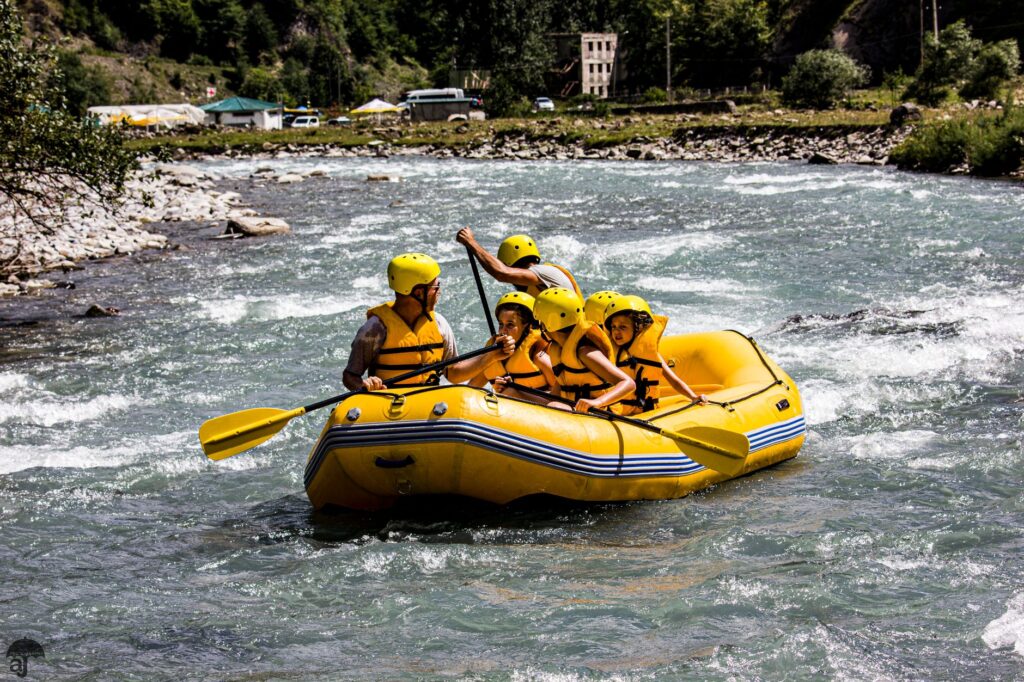
Guided river rafting in Pahalgam on the Lidder River is the headline adventure here, but the valley offers an entire calendar of outdoor pursuits that can fill three or four days without repetition. Whether you are a first-time visitor or a returning trekker, this guide covers every major activity, current prices, timing, and practical advice so you can plan your 2026 Pahalgam trip with confidence.
Why Pahalgam Is Kashmir’s Outdoor Adventure Capital
Sitting at roughly 2,200 metres above sea level in the Lidder Valley, Pahalgam combines glacial rivers, dense pine and deodar forests, open meadows, and high-altitude passes within a compact geography. That variety is what makes it possible to go white-water rafting in the morning, saddle up for a horse ride to Baisaran in the afternoon, and fall asleep inside a riverside camping tent the same evening. The Pahalgam Development Authority (PDA) regulates most commercial adventure operators, which brings a meaningful baseline of safety accountability that many comparable hill destinations in India still lack.
For 2026, the valley has seen expanded trail marking on the Kolahoi Glacier route, improved rafting launch infrastructure at Varganpal Bridge, and a growing number of certified ATV corridors — all of which are covered in detail below.
Guided River Rafting in Pahalgam: Everything You Need to Know
The Lidder River carves a fast, cold, and visually dramatic path through the valley, and rafting it is the single most booked adventure activity in Pahalgam. Certified operators work from two main launch points — near Varganpal Bridge and Yenner (Yainer) Bridge — and must be registered with both the J&K Tourism Department and the Pahalgam Development Authority, meaning guides hold certified rescue qualifications and all equipment meets required safety standards.
Route Options and Prices
There are three clearly defined stretches of river, each suited to a different appetite for adventure and available time:
| Route | Distance | Duration | Price (per person) |
|---|---|---|---|
| Lidder Joy Ride | 2.5 km | 20 – 30 minutes | ₹600 |
| Lidder Long Ride | 5 km | 45 minutes – 1 hour | ₹1,350 |
| Extra Long Ride | 12 km | 1.5 – 2 hours | ₹1,500 |
The Joy Ride is perfect for families with older children or anyone who wants to test the water (literally) before committing to a longer session. The Extra Long Ride at 12 km is the best value for money — the additional ₹150 over the Long Ride buys you well over twice the river time and takes you through the most interesting canyon sections downstream.
Rapid Grades and River Character
The Lidder runs Grade I to Grade III rapids depending on the section and the season. Grade I stretches are broad, smooth, and suitable for absolute beginners. Grade II sections involve small waves and light manoeuvring. Grade III passages — which appear mainly in the middle kilometre range — require active paddling and coordination with the guide’s commands but are entirely manageable without prior experience. There are no Grade IV or V sections on any of the commercially operated stretches.
The river is glacier-fed, which has two practical consequences. First, the water is bone-cold year-round — close to freezing even in July and August. Standard operators do not provide full wetsuits, so wear quick-dry or thermal-layered clothing beneath your life jacket. Second, morning sessions are calmer because overnight temperatures suppress glacial melt, while afternoon sessions carry higher water volumes and stronger turbulence as peak daytime sun melts the upper snowfields. If you prefer a more intense ride, book afternoon; if you want calmer water and clearer conditions, go before 11 AM.
Operating Hours and Season
Rafting operates from April through September, weather and water levels permitting. Daily sessions run from 8:00 AM to 5:00 PM (operators typically accept last bookings by 4:30 PM). Outside these months the river runs either too low or, in spring snowmelt, too dangerously high for commercial operations.
Safety Equipment and Who Cannot Participate
All operators provide helmets, high-buoyancy life jackets, and paddles. Guides carry whistles and communication devices linked to riverbank teams. If upstream rainfall causes sudden muddy discoloration or rising water levels, guides will steer the raft to designated evacuation extraction points along the valley bank — a protocol that has made the Lidder’s commercial rafting record notably incident-free.
The following individuals are strictly barred from participating:
- People with severe cardiovascular conditions or uncontrolled high blood pressure
- Those with severe asthma, epilepsy, or recent spinal or orthopaedic surgery
- Pregnant women (an absolute contraindication — sudden impact and cold water exposure pose serious risks)
- Individuals weighing over 110 kg (242 lbs) where the safety harness and life jacket cannot lock securely
If you wear prescription glasses, secure them with a tight retention strap. Bring an action camera only if it is helmet-mounted or chest-harnessed with a floating tether — handheld selfie sticks and loose phones are prohibited on the raft.
Trekking in Pahalgam: Routes for Every Fitness Level
The trail network radiating from Pahalgam is among the richest in the western Himalaya. The town serves as the primary gateway for both day hikes and multi-day expeditions into the high Himalayan zones.
Kolahoi Glacier Trek (3 – 4 Days)
The Kolahoi Glacier trek is the crown jewel of Pahalgam-based trekking. The route moves through Aru Valley, climbs past Lidderwat meadows, and reaches the moraine of the Kolahoi Glacier at approximately 4,200 metres. The 2026 season has seen improved trail markers and a handful of new fixed camp sites at Lidderwat, making navigation more reliable for self-guided groups. However, hiring a licensed local guide from Aru is strongly recommended because weather in the upper valley can shift within an hour. Expect to pay ₹1,200 – ₹1,800 per day for a certified guide.
Baisaran Meadow (Easy, Half-Day)
Often called “Mini Switzerland,” Baisaran sits about 5 km from Pahalgam town at around 2,440 metres. The trail is gentle and entirely accessible to casual walkers, including older visitors and children above 8 years. The meadow itself is a wide bowl of alpine grass ringed by pine trees, with the snow peaks of Pir Panjal visible on clear mornings. Most visitors combine this with a horse ride (detailed below), but walking up and descending takes under three hours round-trip.
Sheshnag Lake and the Amarnath Trail
The first two days of the traditional Amarnath Yatra route — from Pahalgam through Chandanwari, Pissu Top, and on to Sheshnag Lake — are open to non-pilgrims as a trekking itinerary outside the official yatra window (typically July–August). Sheshnag, at 3,590 metres, is a multi-coloured high-altitude lake with almost surreal clarity. The return journey is two days at a comfortable pace. Chandanwari also offers seasonal snow slopes and is a popular spot for first-time snowball fights among visitors who arrive in April and May.
Tulian Lake (Strenuous, One Day)
For experienced trekkers, Tulian Lake at 3,650 metres above sea level is a challenging single-day or easy two-day objective. The trail gains significant elevation quickly through dense forest before breaking into rocky scree and finally reaching a glacially carved lake that is frozen for much of the year. Begin before 6 AM to ensure a safe return before afternoon weather builds.
Horse Riding in Pahalgam
Horse riding is woven into the local economy and culture of Pahalgam, and it remains one of the most atmospheric ways to reach the surrounding meadows. The Pahalgam Horse and Pony Owner Cooperative regulates routes and pricing, which means rates are standardised and largely non-negotiable at the official booths near the main taxi stand and Baisaran trail head.
Popular Horse Riding Routes and Approximate Fares (2026)
- Baisaran Meadow: The most popular ride, covering the 5 km trail through pine forest to the meadow and back. Approximately ₹800 – ₹1,200 per horse for the return journey.
- Aru Valley: A longer ride of 11 km one way, recommended for those who want to explore the quieter upper valley without trekking. Fares range from ₹1,500 – ₹2,000 depending on duration.
- Chandanwari: Around 16 km from Pahalgam town, this is a half-day ride and one of the more scenic options along the river. Budget ₹2,000 – ₹3,000 return.
Horses are well-maintained and led by experienced handlers who walk alongside. Children can ride with a parent on the same horse or solo with the handler holding the reins. Bargain only if you have not booked through the cooperative’s official booth, and always confirm whether the price quoted is one-way or return before setting off.
Camping in Pahalgam
Camping in the Lidder Valley sits on a spectrum that ranges from glamping-style riverside tents with attached washrooms to true wilderness camping above the treeline on the Kolahoi route. For most visitors, the organised camps set up near Aru Village and along the Betaab Valley road provide the best balance of comfort and natural immersion.
Types of Camps
- Riverside camps (Betaab Valley / Chandanwari road): Semi-permanent Swiss tents with cots, bedding, and attached toilet facilities. Meals are typically included. Expect to pay ₹2,500 – ₹4,500 per person per night all-inclusive in 2026.
- Aru Valley meadow camps: More basic setup closer to nature, often with common washroom blocks. Pricing runs ₹1,500 – ₹2,500 per person including meals.
- High-altitude wilderness camping (Lidderwat / Kolahoi base): Carry-your-own or porter-assisted tents. No facilities. Suitable for experienced campers only. You will need a bonfire permit from the forest department, and campfires are restricted to designated fire pits.
Evening temperatures at Pahalgam drop sharply even in summer — expect 5–8°C after sunset in June and July, and near or below zero in April, May, and September. Pack a proper sleeping bag rated to at least -5°C for any overnight stay above 2,500 metres.
ATV and Quad Bike Rides
All-terrain vehicle (ATV) and quad bike rides have expanded significantly across Pahalgam’s designated adventure zones since 2024. Operators now run short circuits of 1 – 2 km near the main Pahalgam market and longer tracks near Baisaran and the approaches to Betaab Valley.
- Short circuit (1 km): ₹300 – ₹500 per person, approximately 10 – 15 minutes
- Medium track (2 – 3 km, Betaab Valley approach): ₹700 – ₹1,000 per person
- Long route with river crossing sections: ₹1,500 – ₹2,000 per person, available only in the drier months of June through August
Helmets are mandatory and provided. Riders must be at least 18 years old for solo driving; accompanied minors can ride pillion. Avoid unlicensed operators who cannot produce a basic insurance certificate — a growing issue in peak season.
Paragliding and Zorbing
Paragliding tandem flights operate from the slopes above Baisaran, with an altitude of approximately 2,500 metres providing a generous glide path over the pine forest and the Lidder Valley below. Tandem flights with a certified pilot typically cost ₹1,500 – ₹2,500 for a 5 – 8 minute flight. Weight limits apply (maximum 90 kg in most cases), and flights are weather-dependent — morning slots before 10 AM offer the most stable wind conditions.
Zorbing — rolling downhill inside a large inflatable ball — is available at Baisaran meadow on a dedicated grassy slope. It is a family-friendly activity with no age restriction above 5 years, priced at approximately ₹300 – ₹500 per roll. It is not extreme by any measure, but it consistently produces the most laughter per rupee of any activity in Pahalgam.
Fishing on the Lidder River
The Lidder is one of Kashmir’s best brown trout rivers, and angling in Pahalgam is a quietly serious pursuit for those who seek it out. The Jammu & Kashmir Fisheries Department issues fishing permits for specific sections of the Lidder — a day permit costs approximately ₹200 – ₹500 depending on the zone. The season runs from March to September, with April–June and September being optimal for trout activity. Catch-and-release is strongly encouraged and increasingly enforced in designated conservation stretches. Rods and tackle can be rented from a few specialist shops near the main bazaar.
For authoritative information on fishing regulations and permit zones, the Jammu & Kashmir Fisheries Department official portal is the most reliable reference before you travel.
Winter Activities: Skiing and Snowshoeing (October – March)
Although the peak summer season draws the largest visitor numbers, Pahalgam’s winter face is worth planning around for 2026–2027. The valley receives reliable snowfall from late November, and the slopes near Baisaran are used for basic skiing and snowboarding by rental operators from December through February. Skiing here is beginner-level terrain — nothing comparable to Gulmarg — but the landscape is spectacular and crowds are a fraction of what you find in summer.
Snowshoeing along the pine-forested trails between Pahalgam town and lower Aru is a meditative, low-impact alternative that is accessible to most fitness levels. Snowshoe rentals cost approximately ₹300 – ₹500 per day from local sports shops.
Best Time to Visit Pahalgam for Adventure Activities
Different activities peak in different windows, so matching your travel dates to your priorities makes a real difference to the experience:
| Activity | Best Months | Notes |
|---|---|---|
| Guided River Rafting | April – September | Afternoons more intense; mornings calmer |
| Trekking (Kolahoi, Tulian) | June – September | Trails fully clear of snow from mid-June |
| Horse Riding | April – October | Baisaran accessible from mid-April |
| Camping | May – September | Shoulder months require heavier sleeping gear |
| ATV Rides | May – August | Longer routes with river crossings only June–August |
| Paragliding | May – September | Morning slots most stable |
| Fishing | March – September | April–June and September optimal for trout |
| Skiing / Snowshoeing | December – February | Beginner terrain; far fewer crowds |
If you can travel in late June or early July, you get the widest simultaneous access to activities — rafting is at its most thrilling, all trekking routes are open, camping conditions are comfortable, and the meadows are at their greenest. September is the best month for those who want fewer crowds and the clearest mountain visibility.
How to Build a 3-Day Pahalgam Adventure Itinerary
For visitors with three full days, the following sequence balances energy output, travel distances, and variety without double-booking similar experiences:
Day 1: The River and the Meadow
- Morning: Book a morning rafting session — the Lidder Long Ride (5 km, ₹1,350) is the best starting point for first-timers who want more than the Joy Ride
- Afternoon: Horse ride or walk to Baisaran Meadow; zorbing if travelling with children
- Evening: Check into a riverside camp or hotel in Pahalgam town; walk the main bazaar
Day 2: Aru Valley and Lidderwat
- Full day: Drive or taxi to Aru Village (11 km from Pahalgam) and begin the Lidderwat trek; this is a moderately graded 8 km trail gaining around 600 metres — manageable for most reasonably fit adults
- Overnight at Lidderwat camp if doing the Kolahoi extension, or return to Pahalgam by evening for a day-trip version
Day 3: Chandanwari and the Extra Long Raft
- Morning: Drive to Chandanwari (16 km from Pahalgam) for snow play or a short hike toward Pissu Top
- Afternoon: Return to Pahalgam and book the Extra Long Ride (12 km, ₹1,500) for the most complete rafting experience on the Lidder — by now you will paddle with far more confidence than Day 1
- Evening: Paragliding from Baisaran slopes if energy and timing allow
Getting to Pahalgam and Local Transport
Pahalgam is approximately 96 km from Srinagar, a journey of 2.5 to 3.5 hours by road depending on traffic and the season. The Jammu–Srinagar National Highway (NH 44) connects to the Pahalgam spur road via Anantnag. Most visitors travelling on a Kashmir tour package will have a dedicated taxi or shared sumo arranged from Srinagar.
Within Pahalgam, local sumos and shared jeeps run between the main town and Aru, Betaab Valley, and Chandanwari. Private taxi fares from the Pahalgam taxi stand are regulated and posted at the stand — always confirm the fare before boarding. For Betaab Valley, expect to pay approximately ₹600 – ₹800 return by private taxi from the town centre. For Chandanwari the fare is approximately ₹1,000 – ₹1,400 return.
Practical Tips Before You Go
- Clothing: Pack layers regardless of your travel month. Mornings and evenings are cold even in July. Quick-dry fabrics are essential if you plan to raft, and waterproof outer layers are non-negotiable for trekking.
- Altitude awareness: Pahalgam town sits at 2,200 metres. Higher trails push to 3,500 – 4,200 metres. Ascend gradually, stay hydrated, and recognise the symptoms of altitude sickness — headache, nausea, and disorientation are warning signs to descend immediately.
- Cash: ATMs in Pahalgam town are available but can run out of cash in peak season. Carry sufficient currency from Srinagar or Anantnag for activity payments, guides, and campsites that do not accept UPI.
- Permits: Non-Indian nationals require a Protected Area Permit (PAP) for certain zones beyond Pahalgam town, including parts of the Amarnath trail. Apply through the J&K Tourism Department well before your travel date.
- Mobile connectivity: Signal is available in Pahalgam town and Betaab Valley but drops significantly beyond Aru and disappears entirely above Lidderwat. Download offline maps (Maps.me or Google Maps offline packs) before leaving town.
- Book early: Peak season (June–August) sees camp sites and registered rafting operators fill up 2 – 3 days in advance. Weekend slots on rafting go fastest. Pre-booking through a reputable Kashmir tour operator is the most reliable way to secure your preferred timings.
Frequently Asked Questions
Are wetsuits or specialised thermal gear provided during early season rafting?
No, standard operators in Pahalgam do not provide full wetsuits. Because the Lidder River is fed directly by melting glaciers, the water remains extremely cold — near-freezing — even in summer. Participants must wear their own quick-dry, thermal-layered, or woollen clothing underneath the provided life jackets.
What happens if a sudden weather shift or flash rain occurs mid-trip?
Professional guides carry whistles and communication devices linked to riverbank teams. If upstream rain causes sudden muddy discolouration, rising water levels, or dangerous turbulence, guides will immediately steer the raft to designated evacuation extraction points along the Lidder valley bank.
Can I bring my own GoPro or action camera on the raft?
You can bring an action camera only if it is securely mounted via a professional helmet strap or a chest harness with a floating tether. Handheld selfie sticks or loose phones are strictly prohibited because an unexpected rapid strike can cause you to lose your grip instantly.
Are commercial rafting operators on the Lidder River government-certified?
Yes, legitimate operators working around Varganpal and Yainer must be registered with the J&K Tourism Department and the local Pahalgam Development Authority, ensuring guides hold certified rescue qualifications and equipment meets baseline safety standards.
How does the melting glacial cycle affect daily water flow and rafting timing?
Morning sessions typically feature calmer, clearer, and lower water levels as overnight temperatures keep glacial melt minimal. Afternoon sessions experience higher water volumes and stronger turbulence due to peak daytime sun melting the upper snowfields, making afternoons more intense for experienced paddlers.
Who is strictly prohibited from participating in Lidder River rafting?
Individuals with severe cardiovascular conditions, uncontrolled high blood pressure, severe asthma, epilepsy, or recent spinal or orthopaedic surgeries are strictly barred from rafting due to the high-stress physical environment and jarring impact of Class II and III rapids.
Are pregnant women allowed to go rafting in Pahalgam?
No, pregnancy is an absolute contraindication for white-water rafting. The risk of sudden impact, heavy physical exertion, or accidental ejection into cold glacial water poses severe safety hazards for both mother and child.
Can people wearing prescription glasses or contact lenses participate in rafting?
Yes, but glasses must be secured with a tight retention strap or goggles. The turbulent glacial spray and potential water splashes will easily wash away unsecured glasses or dislodge contact lenses during rapid sections.
Is there a weight limit for passengers on the rafts?
While standard life jackets fit most body types, individuals weighing over 110 kg (242 lbs) or with body proportions that prevent the safety harness and high-buoyancy jacket from locking securely may be restricted by the river guide for safety compliance.
Is prior experience needed for any of the adventure activities in Pahalgam?
For rafting, horse riding, ATV rides, zorbing, and paragliding tandem flights, no prior experience is required. For the Kolahoi Glacier trek and Tulian Lake trek, a reasonable level of physical fitness and prior hiking experience are strongly advisable, and a certified local guide is recommended for both routes.
Book Your Pahalgam Adventure
Planning a multi-activity trip to Pahalgam is significantly easier — and often cheaper — when arranged through a local specialist who understands seasonal availability, operator reliability, and the logistics of moving between sites efficiently. Call Kashmir Tour Packages Taxi at 9149531004 to discuss your itinerary, get up-to-date availability on rafting slots, camping bookings, and guided treks, or simply ask questions about what suits your group’s fitness level and travel dates. The team can bundle transport from Srinagar with your activity schedule so nothing is left to chance on the day.
Last updated: 2026. Activity prices, operating hours, and seasonal availability are subject to change based on weather conditions, regulatory updates, and operator decisions. Always confirm details directly with operators or your tour coordinator before travel.
Related: guided river rafting in Pahalgam
Related: scenic Lidder River and its surroundings
Part of our complete guide: Guided river rafting in pahalgam
Book this experience
📋 Get In Touch
Fill in your details — our team will confirm within 2 hours.

I'm Suhail Ahmad, born and raised in Srinagar. In 2022 I founded Kashmir Tour Packages Taxi — a licensed taxi and tour operator registered with the Jammu & Kashmir Tourism Department — because I saw too many visitors arrive in Kashmir with bad information, unreliable drivers, and no idea what was actually worth seeing.
Every article I write comes from personal experience on these routes: the correct season to visit Thajiwas Glacier, the checkpoints you'll cross on the way to Gulmarg, where the road to Betaab Valley gets narrow, what Amarnath Yatra pilgrims actually need to know before they book a taxi. I don't write from Wikipedia. I write from having driven these roads myself, with guests in the back seat.
Our fleet covers Srinagar, Gulmarg, Pahalgam, Sonamarg, Doodhpathri, Yusmarg, Amarnath, and long-haul routes to Leh and Jammu under All India Tourist Vehicle Permits. If something I've written about a route, price, or season seems off — call me directly on +91 9149531004. I answer that number myself.
- J&K Tourism Dept — Registered Tour Operator