For a Kashmir autumn photography tour, the sweet spot is usually late September through October, when Chinar leaves begin turning gold, orange, and red and the light stays soft enough for sunrise and sunset work. The best results come from a taxi-first plan that lets you chase color stage, weather, and light instead of following a fixed sightseeing schedule.
Best early-autumn timing for Chinar colors
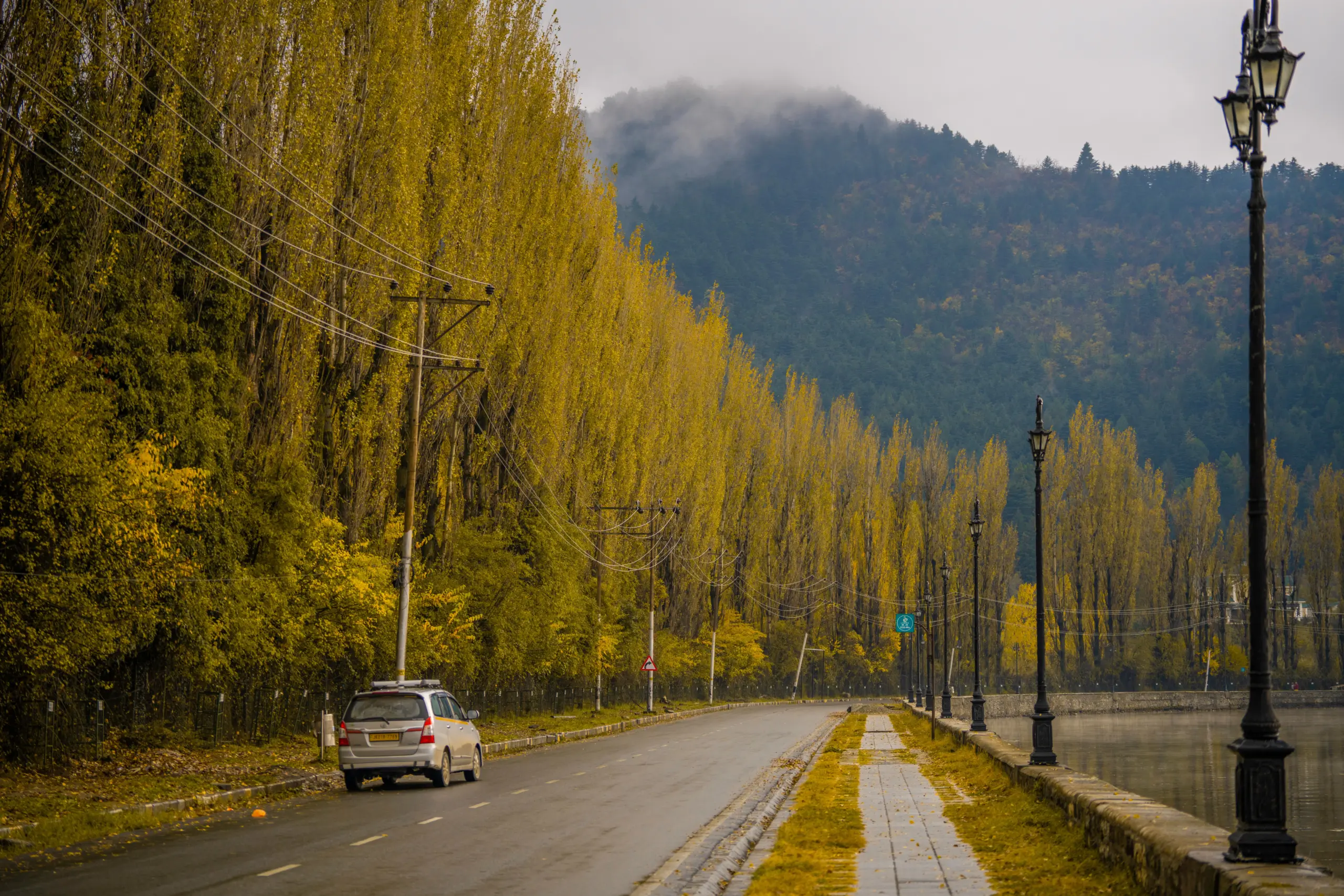
Early autumn in Kashmir is not one single look; it moves in stages. The first sign is a light yellowing on some Chinar trees in Srinagar, especially in sheltered gardens and older neighbourhood roads. After that, the color deepens into copper, amber, orange, and then a stronger red as nights get cooler. For a Kashmir autumn photography tour, this change matters more than the calendar date, because one road may look perfect while another is still green.
In practical terms, late September is often the first window for mixed green-and-gold frames, which are excellent for storytelling images. The strongest full-color scenes are more likely in October, especially if the weather turns crisp and dry. If you want the broadest autumn palette, plan flexibility into your route and keep one extra half-day open for reshoots. That way, you can return to a location if the Chinar color stage improves overnight.
For photographers, the best light is usually early morning and late afternoon. Morning gives cleaner roads, calmer lake water, and fewer people at popular viewpoints. Late afternoon brings warm side light that makes red and gold leaves glow. On cloudy days, the color can still work well because the diffused light prevents harsh highlights and makes leaf texture easier to capture. If you are combining this trip with a broader seasonal plan, the Kashmir autumn gold package 5 days gives a useful structure for multi-day travel, but for pure photography you should still keep the timing flexible.
Weather and road conditions can change quickly in the hills, so always check current local advisories before sunrise starts or before heading toward higher routes. Official tourism and travel information is available from the Jammu & Kashmir Tourism Development Corporation, the Kashmir reference overview, and the official Incredible India Jammu & Kashmir page. For any mountain travel, the safest plan is to leave room for road delays and keep your taxi ready before first light.
Kashmir autumn photography tour: top photography stops in Srinagar, Gulmarg road, Dal Lake, and Nishat
The most productive Kashmir autumn photography tour is built around places where color, water, architecture, and mountain backdrops can all work in one frame. Srinagar gives you Chinar roads and gardens, Dal Lake gives you reflective sunrise scenes, and the Gulmarg road adds alpine depth to the autumn palette. Nishat and nearby Mughal gardens are ideal for layered compositions with the lake, terraces, and trees.
Srinagar Chinar roads and old city edges
Srinagar is the best base for early autumn color hunting because Chinar trees appear in pockets across the city, not just in one famous garden. The strongest images often come from quiet residential roads, neighbourhood lanes, and older routes near heritage areas where tall trees frame the street rather than block it. From central Srinagar, most of these spots are within 2 to 10 km, with driving times usually around 10 to 30 minutes depending on traffic.
For sunrise, the city is best when the streets are empty and the low light falls across the trunks and leaves. If you want a clean frame with minimal people, go out before the city fully wakes up. If you want a livelier street story, return after 8:00 AM when school traffic, walkers, and shop shutters add scale. Parking is usually roadside and free in many residential stretches, but space can be limited, so a taxi helps because the driver can wait while you work short frames without parking stress.
Dal Lake sunrise viewpoints
Dal Lake is one of the most reliable sunrise locations for a Kashmir autumn photography tour because it gives you water, shikaras, misty mornings, and reflections in one stop. The lake is around 5 to 8 km from central Srinagar, with a drive time of roughly 15 to 25 minutes depending on your starting point. For sunrise, aim to reach your spot at least 30 to 40 minutes before the sun rises so you can photograph the blue-hour sky, boat silhouettes, and still water.
The best look is often a calm morning with light haze, when the surrounding hills stay soft and the water picks up pastel tones. If the day is clear, you can also shoot the lake after sunrise when the first warm light touches the houseboats and shore edge. For a focused planning guide, see the Dal Lake sunrise photography page, especially if you want to build one morning around a single light window. Entry to the lake area is generally free, though shikara rides and parking can add separate costs depending on where you stop.
Nishat Bagh and the Mughal garden frame
Nishat Bagh is one of the best autumn gardens near Srinagar because the terraced layout gives you depth, symmetry, and tree lines that change with the season. It sits about 11 km from the city centre, with an approximate drive time of 25 to 35 minutes. The best time is early morning for fewer visitors and softer side light, or late afternoon when the lake and hillside background warm up. Garden entry fees can change by season or authority, so check at the gate before planning your exact stop.
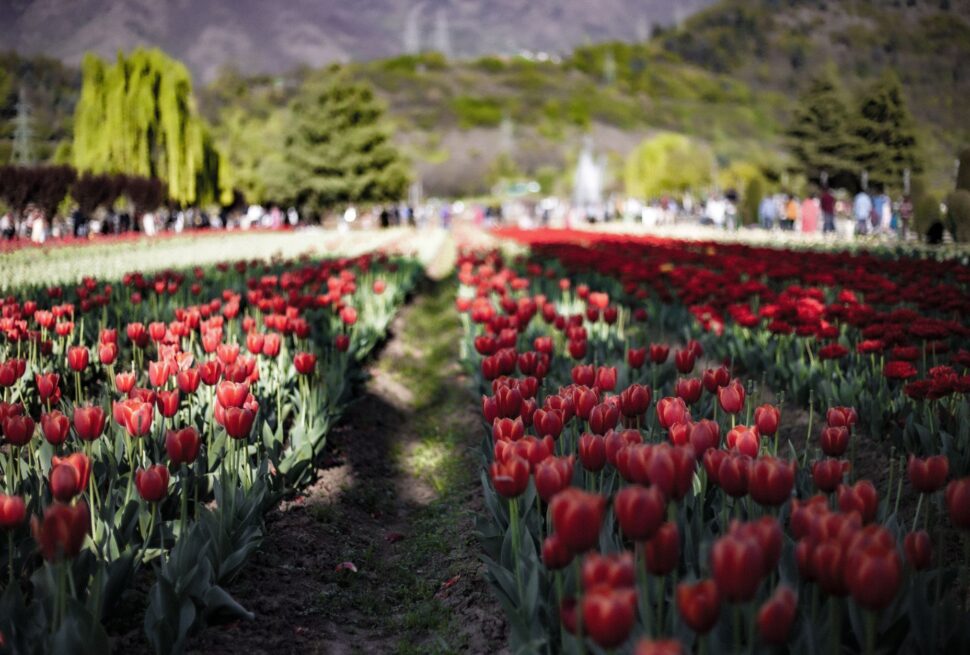
Nishat works especially well for photographers who want a more formal composition after street and lakeside shooting. The terraces let you use foreground flowers, stone paths, water channels, and Chinar leaves in layered frames. If you want to compare autumn framing with spring color logic, the Tulip Garden Srinagar photography guide is useful for understanding how light and composition change across seasons, even though the subject is different.
Gulmarg road and Tangmarg stretch
The Gulmarg road is not just a transfer route; it is one of the strongest landscape add-ons for an autumn photography tour because the road moves from valley color into mountain scale. From Srinagar to Tangmarg, the distance is about 57 km, and the drive usually takes around 1 hour 45 minutes to 2 hours 15 minutes, depending on traffic and road conditions. Gulmarg itself lies farther ahead, and if you plan to work on the road rather than just reach the meadow, leave early enough to stop for roadside frames without rushing.
This stretch is especially good in afternoon light, when the side slopes catch warm tones and the road layers into the forest and mountains. For route ideas, the Gulmarg Tangmarg road trip guide can help you decide where to pause for the best visual break. If you continue into Gulmarg proper, remember the local union rule: a Srinagar cab drops you there, and inner sightseeing or point-to-point movement uses local union cabs arranged on the spot. That matters for photography because it affects how long you can stay at each viewpoint and how much gear you can comfortably move.
Kashmir autumn photography tour: taxi route, vehicle choice, and half-day/full-day plan
A private taxi is the best way to run a Kashmir autumn photography tour because you need control over timing, short roadside stops, and return flexibility. A fixed sightseeing bus works for general tourism, but it is too rigid for sunrise, leaf-stage changes, and weather-driven rerouting. With a taxi, you can leave before dawn, pause where the color is strongest, and return only after you have the frames you want.
| Vehicle | Seats | Non-AC (INR) | AC (INR) |
|---|---|---|---|
| Etios | 4 | 2000 | 2300 |
| Amaze | 4 | 2200 | 3000 |
| Tavera | 7 | 2200 | 2600 |
| Ertiga | 7 | 2500 | 3000 |
| Innova | 7 | 2500 | 3000 |
| Scorpio | 7 | 3500 | 3500 |
| Innova Crysta | 7 | 3500 | 4500 |
| Tempo Traveller 12 Seater | 12 | 5500 | 6000 |
| Tempo Traveller 14 Seater | 14 | 6000 | 6500 |
| Urbania | 12 | 7000 | 7500 |
For solo travelers and couples, an Etios or Amaze is usually the most practical choice because the frame is compact and the per-day price stays efficient. For a small group with camera bags and tripods, an Innova, Ertiga, or Tavera is easier for movement and gear storage. If your group includes 8 to 12 people and you want a comfortable photography circuit, the Tempo Traveller options or Urbania work better because nobody feels rushed between stops. All fares are per day, all-inclusive, and include fuel, tolls, driver allowance, and night halts.
Here is a practical half-day photography circuit for Srinagar and nearby stops. It is best when Chinar color is already showing in the city and you want a sunrise-to-midday sequence without leaving the valley floor.
| Time / Stage | Place | Notes |
|---|---|---|
| 5:30 AM | Hotel pickup in Srinagar | Head out before sunrise for blue-hour frames |
| 6:00 AM | Dal Lake | Sunrise, shikara silhouettes, still water |
| 8:00 AM | Chinar roads in Srinagar | Street light, low traffic, leaf detail |
| 10:00 AM | Nishat Bagh | Garden terraces, lake backdrop, cleaner daylight |
| 12:30 PM | Return to hotel | Rest, backup files, reshoot if light improves |
A full-day photography plan is better if you want both city color and a mountain road sequence. Start with Dal Lake before sunrise, work through Srinagar Chinar lanes, stop at Nishat around mid-morning, then continue toward Tangmarg or the Gulmarg road for afternoon landscape frames. This creates a complete Kashmir autumn photography tour with water, street, garden, and mountain material in one day.
| Time / Stage | Place | Notes |
|---|---|---|
| 5:00 AM | Pickup | Start early for sunrise and road flexibility |
| 6:00 AM | Dal Lake | Best for reflections and morning mist |
| 8:30 AM | Srinagar Chinar lanes | Street color, portraits, detail shots |
| 10:30 AM | Nishat Bagh | Balanced light, terraces, wider compositions |
| 1:00 PM | Lunch break | Use hotel or city stop; back up cards |
| 2:30 PM | Gulmarg road / Tangmarg stretch | Afternoon mountains, roadside autumn tones |
| 6:00 PM | Return to Srinagar | Golden hour ending, road-side sunset if clear |
For route planning, keep one important union rule in mind. A Srinagar taxi can take you to Gulmarg, Pahalgam, or Sonamarg, but inner sightseeing in those areas uses local union cabs. That means your photographer’s schedule should allow for a transfer if you want to move deeper inside a valley or meadow zone. It is better to plan this in advance than to lose light while deciding on the spot.
If your main goal is autumn color rather than a long scenic tour, the smartest approach is to focus on one sunrise location and one afternoon road route. That is why a Kashmir autumn photography tour works best when the day is divided by light, not just by distance. Early dawn belongs to Dal Lake or a quiet city street; late afternoon belongs to the Gulmarg road, Tangmarg, or a garden with lower sun.
FAQ
When is the best time for Chinar photography in Kashmir?
The best time is usually late September to October, when Chinar leaves begin turning gold, orange, and red. For the strongest color contrast, shoot early morning or late afternoon on clear days, and build in a flexible taxi plan so you can chase the best light and leaf stage.
Which places are best for autumn photos near Srinagar?
Top spots include Chinar-lined roads in Srinagar, Mughal gardens, Dal Lake sunrise viewpoints, and the Gulmarg–Tangmarg stretch if you want mountain backdrops. The best results come from combining one city sunrise stop with one afternoon route for warm, low-angle light.
Is a taxi better than a fixed sightseeing bus for an autumn photo tour?
Yes, a taxi is better because early autumn photography depends on timing, light, and leaf color, which can change quickly. A private taxi lets you stop for short roadside frames, adjust for weather, and spend more time at the most photogenic locations.
How to book the right car for your Kashmir autumn photography tour
Choose the vehicle based on group size and gear, not just seat count. A compact sedan is enough for one or two photographers with light luggage, while a 7-seater is more comfortable if you carry tripods, multiple lenses, or want room to change outfits during long stops. For group shoots, a Tempo Traveller or Urbania makes the day smoother because the team can move together and no one gets split between cars.
For private taxi booking, route planning, and custom autumn photography days, Kashmir Tour Packages Taxi operates from Jamia Masjid, Nowhatta, Srinagar, with dispatch available 24/7 and service hours from 6:00 AM to 9:00 PM IST daily. You can book via WhatsApp taxi booking for Kashmir or call +91 91495 31004. If your plan includes a multi-day seasonal circuit, the team can also help coordinate city sunrise starts, mountain road afternoons, and union-cab handoffs where required.

I'm Ahmad Suhail, born and raised in Srinagar. In 2022 I founded Kashmir Tour Packages Taxi — a licensed taxi and tour operator registered with the Jammu & Kashmir Tourism Department — because I saw too many visitors arrive in Kashmir with bad information, unreliable drivers, and no idea what was actually worth seeing.
Every article I write comes from personal experience on these routes: the correct season to visit Thajiwas Glacier, the checkpoints you'll cross on the way to Gulmarg, where the road to Betaab Valley gets narrow, what Amarnath Yatra pilgrims actually need to know before they book a taxi. I don't write from Wikipedia. I write from having driven these roads myself, with guests in the back seat.
Our fleet covers Srinagar, Gulmarg, Pahalgam, Sonamarg, Doodhpathri, Yusmarg, Amarnath, and long-haul routes to Leh and Jammu under All India Tourist Vehicle Permits. If something I've written about a route, price, or season seems off — call me directly on +91 9149531004. I answer that number myself.
- J&K Tourism Dept — Registered Tour Operator