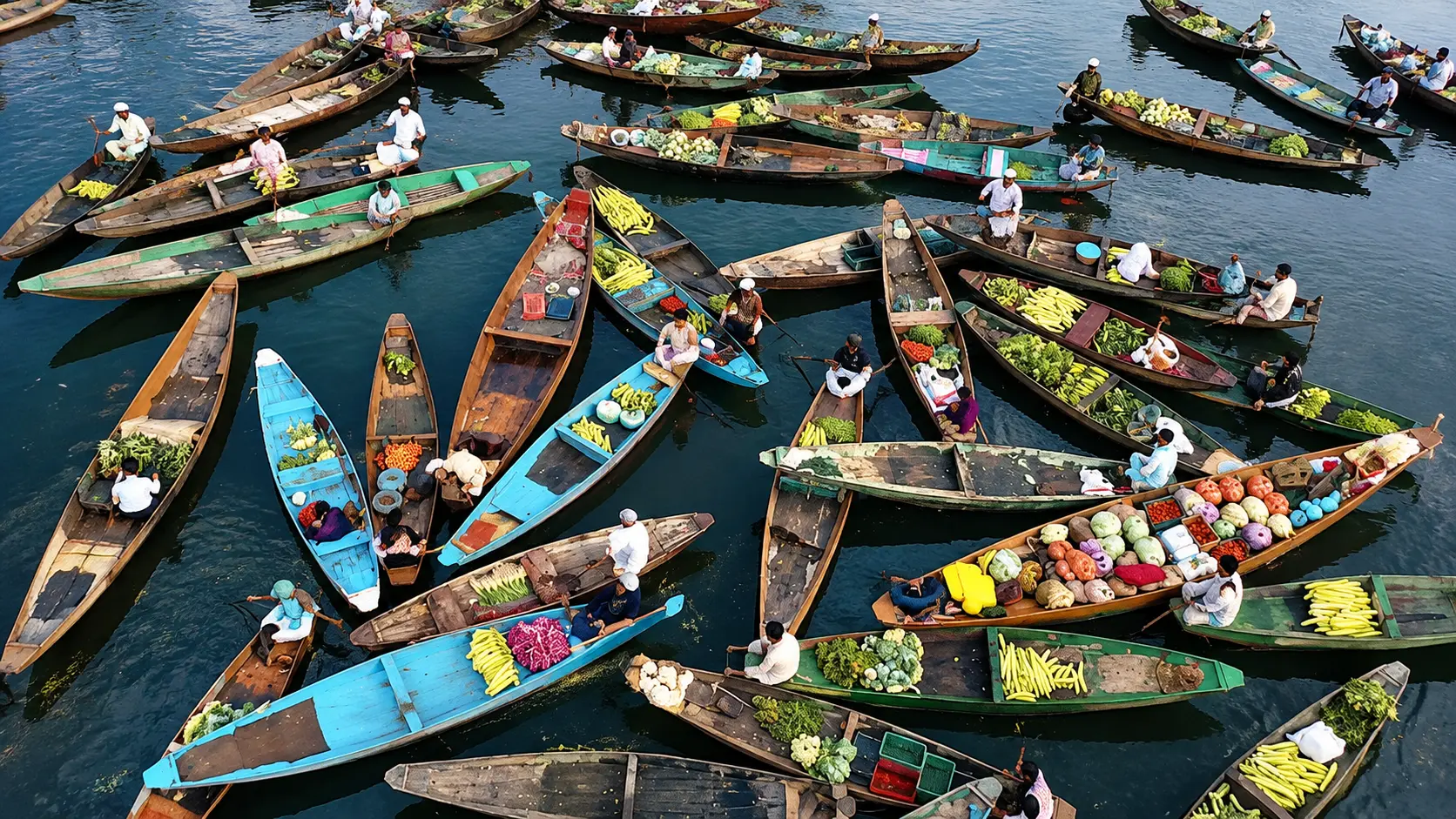
The floating vegetable market on Dal Lake is a dawn market where farmers who grow vegetables on the lake’s floating gardens trade from their boats. It runs from about 5:00 to 7:30 AM in summer, and starts later, around 6:30 AM, in winter. It sits in the Gudder (Gudri) area of the inner lake, near Karapora and Mir Bahri. You can only get there by shikara, about 30 to 45 minutes from the Dal Gate ghats. Visiting is free; you pay only for the shikara.
Quick answer Timings: about 5:00–7:30 AM in summer, from around 6:30 AM in winter. Location: Gudder (Gudri) area of Dal Lake, near Karapora and Mir Bahri. Getting there: shikara only, 30–45 minutes from the Dal Gate ghats or straight from your houseboat. Shikara fare: ₹700 per boat for the first hour, ₹400 for each extra hour, so a 3-hour sunrise trip costs ₹1,500 per boat. Entry: free. Open all year, busiest from April to October.
Summer market
April to October
From about 5:00 AMOver by 7:30 AM
- Tomatoes, cucumbers, melons and pumpkins
- Lotus stem (nadru) and haakh
- Busy, with the most boats
- Leave your ghat by 4:30 AM
Winter market
November to March
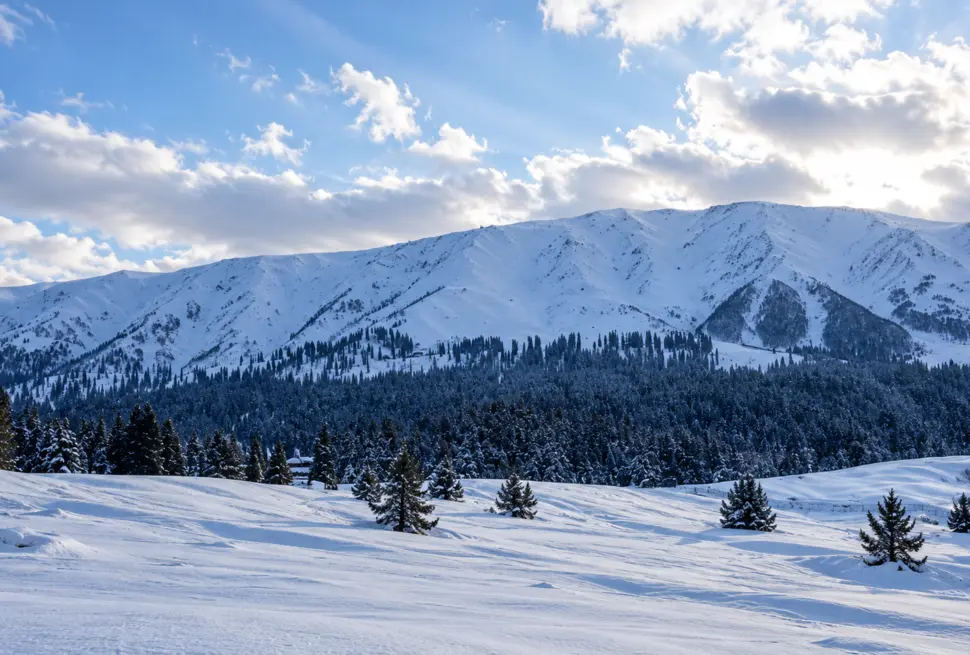
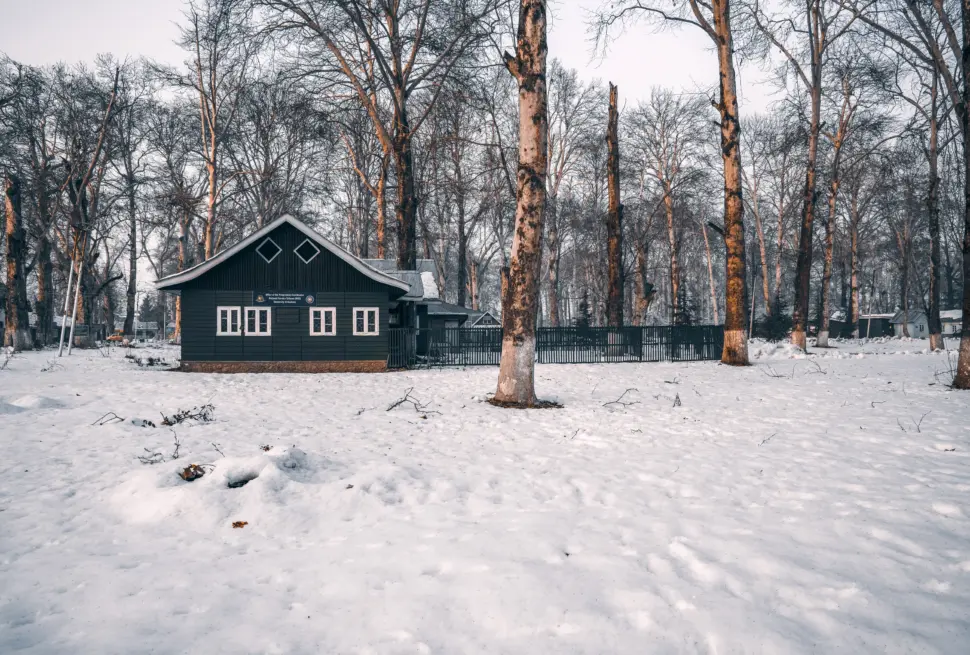
From about 6:30 AMBelow 0°C at dawn
- Turnips, radishes, carrots and spinach
- Cabbage, cauliflower and haakh
- Fewer boats, short and quiet trading
- Ice on the lake in Chillai Kalan
What Is the Floating Vegetable Market?
Locally the market is called gudder. Before sunrise, growers paddle boats loaded with vegetables to one spot in the inner lake and sell to each other and to wholesale buyers from Srinagar, boat to boat. There are no stalls and no shops; the whole market is on the water. Greater Kashmir describes it as more than a century old.
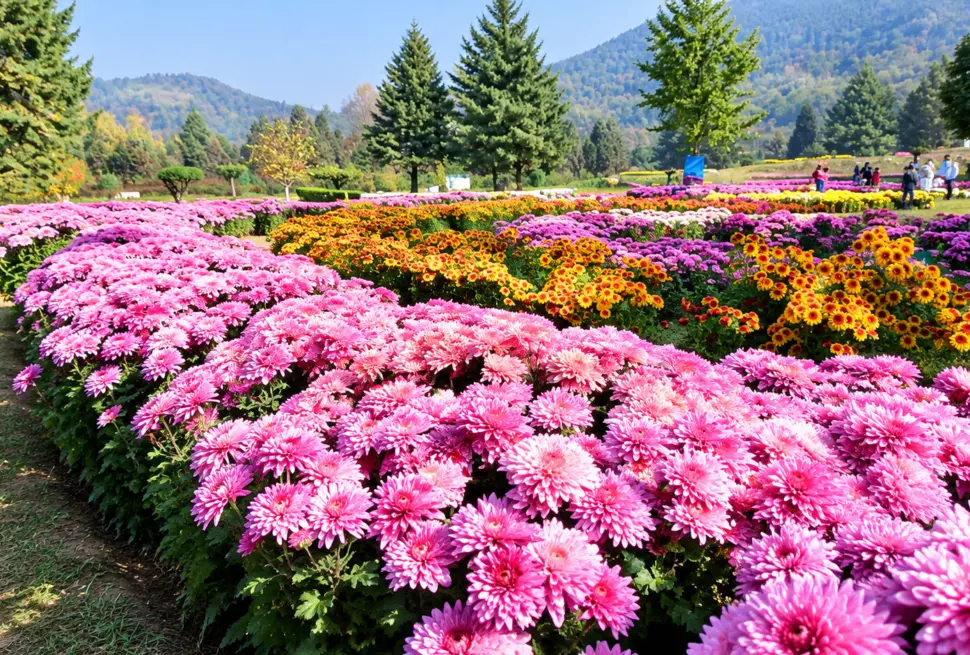
The vegetables come from the lake’s floating gardens. A raadh is a mat woven from lake weeds, dried and layered with mud, which can be towed around the lake. Demb is marshland along the edges of the lake that is farmed in the same way but stays in place. Lotus stem (nadru), haakh and seasonal vegetables from these gardens reach Srinagar’s kitchens the same morning. A few boats also sell flowers.
It is a working wholesale market, not a show for visitors. Most buyers are traders, so keep your shikara to the side and let the boats trade.
Floating Market Timings
| Season | Trading starts | Leave your ghat by | Over by |
|---|---|---|---|
| Summer (April–October) | About 5:00 AM | 4:30 AM | About 7:30 AM |
| Winter (November–March) | About 6:30 AM | 6:00 AM | Soon after sunrise |
Times are approximate and shift with sunrise. The market opens every day of the year, but in winter fewer boats come and trading is brief.
How to Reach the Floating Market
The market cannot be reached by road. Take a shikara from the Dal Gate ghats, or ask your houseboat to arrange one; the ride takes about 30 to 45 minutes each way. Book the shikara the evening before so the boatman is waiting at your ghat before dawn.
Staying in a hotel away from the lake? Our cab can pick you up before dawn and drop you at the ghat. Send your dates and hotel on WhatsApp at +91 91495 31004 and we will arrange the early shikara and the cab together.
Shikara Fare for the Floating Market
| Ride | Fare per boat |
|---|---|
| First hour | ₹700 |
| Each extra hour | ₹400 |
| 2 hours (market only) | ₹1,100 |
| 3 hours (market, Char Chinar and inner lake) | ₹1,500 |
The fare is per shikara, not per person. Agree the route and the number of hours with the boatman before you set off. See our Dal Lake shikara ride guide for other routes.
Combine It With
On the way back
Char Chinar island
The small island with its chinar trees is a short ride from the inner lake and quiet in the early morning.
Same morning
Shikara around Dal Lake
Extend the ride past the houseboats, floating gardens and lake villages after the market closes.
Later in the day
Mughal gardens
Nishat and Shalimar are on the lake’s east shore, a short drive from the ghats by cab.
Tips for Visiting
Plan Your Trip
The floating market fits into any Srinagar day. Our 3 Nights 4 Days and 5 Nights 6 Days packages include a houseboat night on Dal Lake, the easiest base for an early start. Prefer to plan it yourself? Our Kashmir taxi with driver starts at ₹2,000 a day.
Frequently Asked Questions
What time does the Dal Lake floating market open?
Around 5:00 AM in summer, and it is over by about 7:30 AM. In winter trading starts later, around 6:30 AM, and ends soon after sunrise.
Where is the floating vegetable market in Srinagar?
In the Gudder (Gudri) area of the inner Dal Lake, near Karapora and Mir Bahri. It is on the water, so you reach it by shikara, about 30 to 45 minutes from the Dal Gate ghats.
How much does a shikara to the floating market cost?
₹700 per boat for the first hour and ₹400 for each extra hour. A 2-hour market trip costs ₹1,100 and a 3-hour sunrise trip with Char Chinar costs ₹1,500 per boat.
Is there an entry fee?
No. The market is free to visit; you pay only for the shikara.
Is the floating market open in winter?
Yes, every day of the year. In winter fewer boats come, trading starts around 6:30 AM, and in Chillai Kalan vendors sometimes break ice on the lake to reach the market.
What is sold at the floating market?
Vegetables grown on the lake’s floating gardens: lotus stem (nadru), haakh, tomatoes, cucumbers and melons in summer; turnips, radishes, carrots, spinach and cabbage in winter. A few boats sell flowers.
Is the floating market worth visiting?
Yes, if you can get up early. It shows everyday life on Dal Lake that most visitors miss, and the lake is at its calmest at sunrise.

I'm Ahmad Suhail, born and raised in Srinagar. In 2022 I founded Kashmir Tour Packages Taxi — a licensed taxi and tour operator registered with the Jammu & Kashmir Tourism Department — because I saw too many visitors arrive in Kashmir with bad information, unreliable drivers, and no idea what was actually worth seeing.
Every article I write comes from personal experience on these routes: the correct season to visit Thajiwas Glacier, the checkpoints you'll cross on the way to Gulmarg, where the road to Betaab Valley gets narrow, what Amarnath Yatra pilgrims actually need to know before they book a taxi. I don't write from Wikipedia. I write from having driven these roads myself, with guests in the back seat.
Our fleet covers Srinagar, Gulmarg, Pahalgam, Sonamarg, Doodhpathri, Yusmarg, Amarnath, and long-haul routes to Leh and Jammu under All India Tourist Vehicle Permits. If something I've written about a route, price, or season seems off — call me directly on +91 9149531004. I answer that number myself.
- J&K Tourism Dept — Registered Tour Operator